HOMELESSNESS SOLUTIONS
The San Diego Housing Commission (SDHC) is a leading partner in efforts among many organizations working to address homelessness in the City of San Diego. These include the Community Action Plan on Homelessness for the City of San Diego. SDHC’s activities include:
- Operating programs that provide services directly to San Diegans at risk of or experiencing homelessness, including programs to prevent homelessness.
- Administering more than 40 City of San Diego homelessness shelters and services programs.
- Owning and managing affordable housing with supportive services.
- Providing rental assistance for previously unhoused households.
Collaborating on Homelessness Solutions
| City of San Diego |
| SDHC |
| County of San Diego |
| San Diego Regional Task Force on Homelessness |
| U.S. Federal Government |
| California State Government |
| Homelessness Service Providers |
| Landlords |
| Developers |
| Community Organizations |
| Philanthropy |
HOMELESSNESS PROGRAMS AND SERVICES CITY- OR SDHC-FUNDED
Fiscal Year 2026 (July 1, 2025 – June 30, 2026)





UPDATE: DIVERSION COLLECTIVE
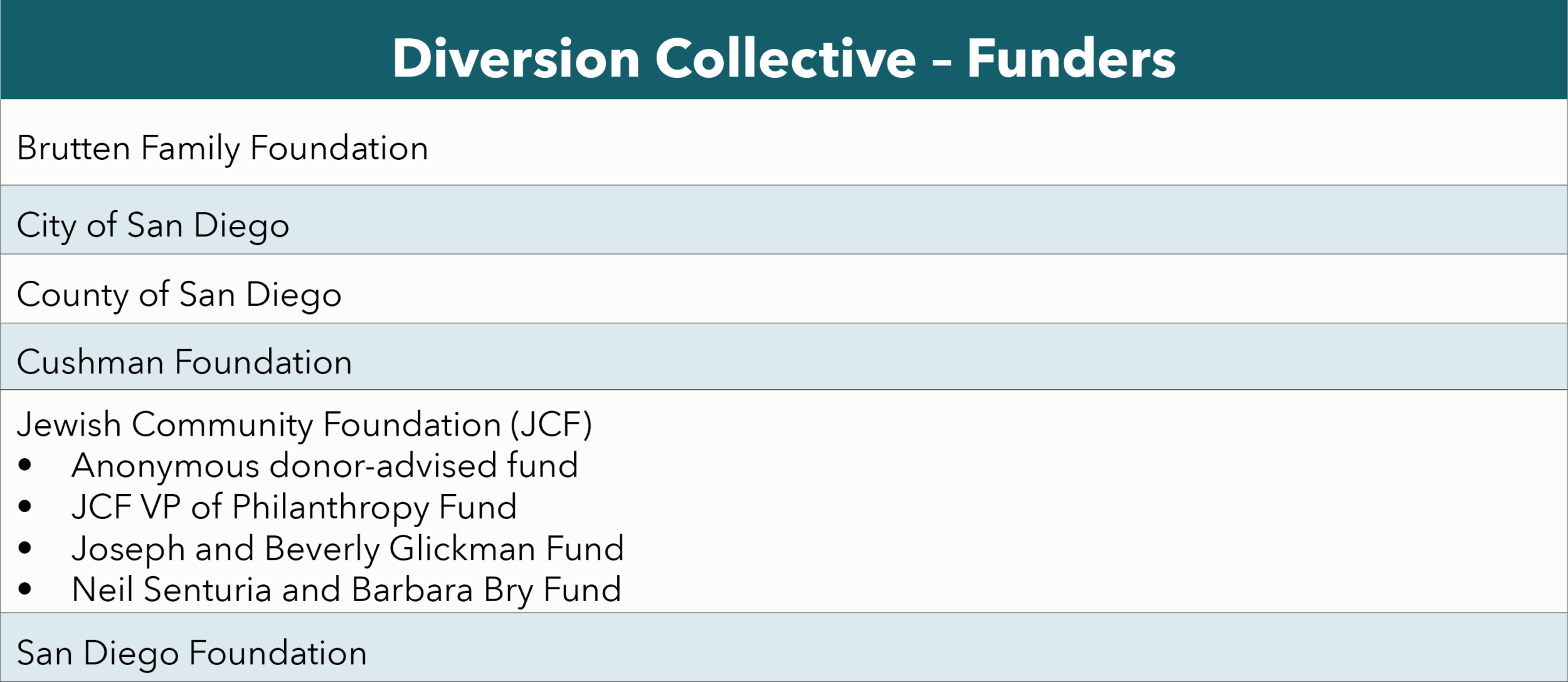
SDHC is collaborating with a wide range of organizations to expand homelessness diversion resources across the San Diego region. This is known as the Diversion Collective. It launched in June 2026, and a formal kickoff meeting occurred in July 2026.
The Diversion Collective is an initiative to help up to 600 households experiencing homelessness or at imminent risk of homelessness throughout San Diego County avoid shelter or shorten their stays in shelter and return more quickly to stable housing. It builds on SDHC’s experience with diversion programming since 2017, which has helped more than 900 households avoid extended shelter stays.
Homelessness diversion programming is a proven method for more quickly and effectively ending people’s experience with homelessness and helping them regain housing stability. It is also a significantly more cost-effective way to assist unhoused individuals and families than extended stays in shelters or transitional housing, street outreach or encounters with other emergency systems.
Diversion: Provides light-touch case management and short-term financial resources to eligible households experiencing homelessness and accessing the homelessness crisis response system. Staff work with the household to identify safe and immediate alternative housing options and to submit relevant referrals to services and financial resources to help the household stabilize in permanent housing.

June 1, 2026 – July 31, 2026


Preventing Homelessness
Housing Instability Prevention Program
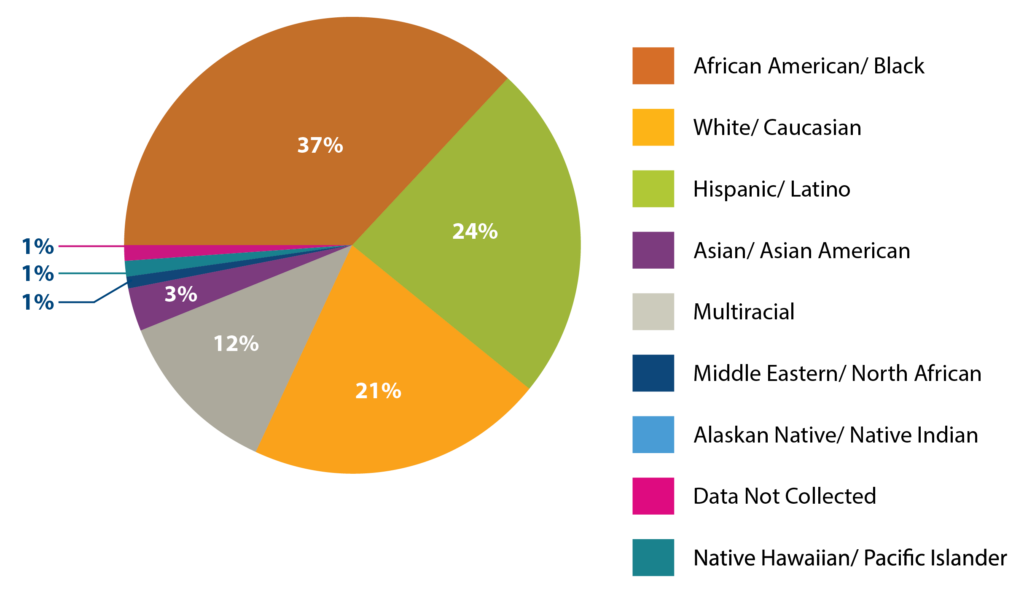
Hundreds of City of San Diego households experiencing a housing crisis and at risk of homelessness receive help from the Housing Instability Prevention Program (HIPP) to stay in their rental homes. These households have no alternative housing options, do not receive ongoing rental assistance from another program, and do not have the money or support network to resolve their housing crisis on their own.
SDHC operates HIPP for the City of San Diego, which funds the program.
SDHC provides enrolled households with a $250, $500, $750 or $1,000 subsidy per month toward their rent, depending on the household’s circumstances. HIPP assists with housing-related expenses, such as past-due rent and past-due utilities, depending on the household’s need. These payments are made directly to the landlord or utility company. HIPP also provides case management. Case managers work with the household to create a housing stability plan, to identify opportunities to increase household income, to make referrals to community-based resources and any other solutions to stabilize their housing. Enrolled households receive assistance for up to 24 months.
June 30, 2026
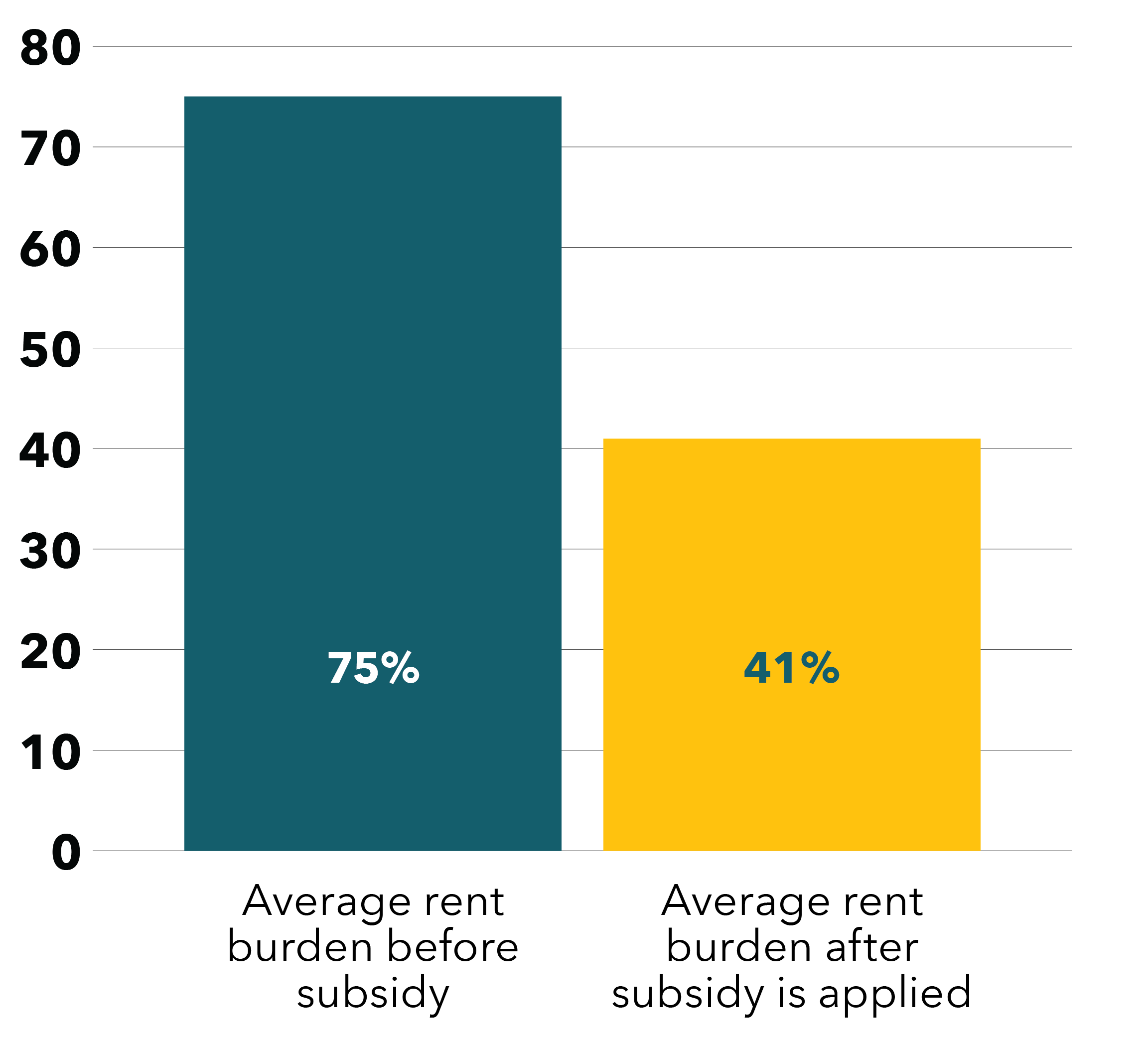
“Rent burden” refers to the percentage of household income spent on rent.
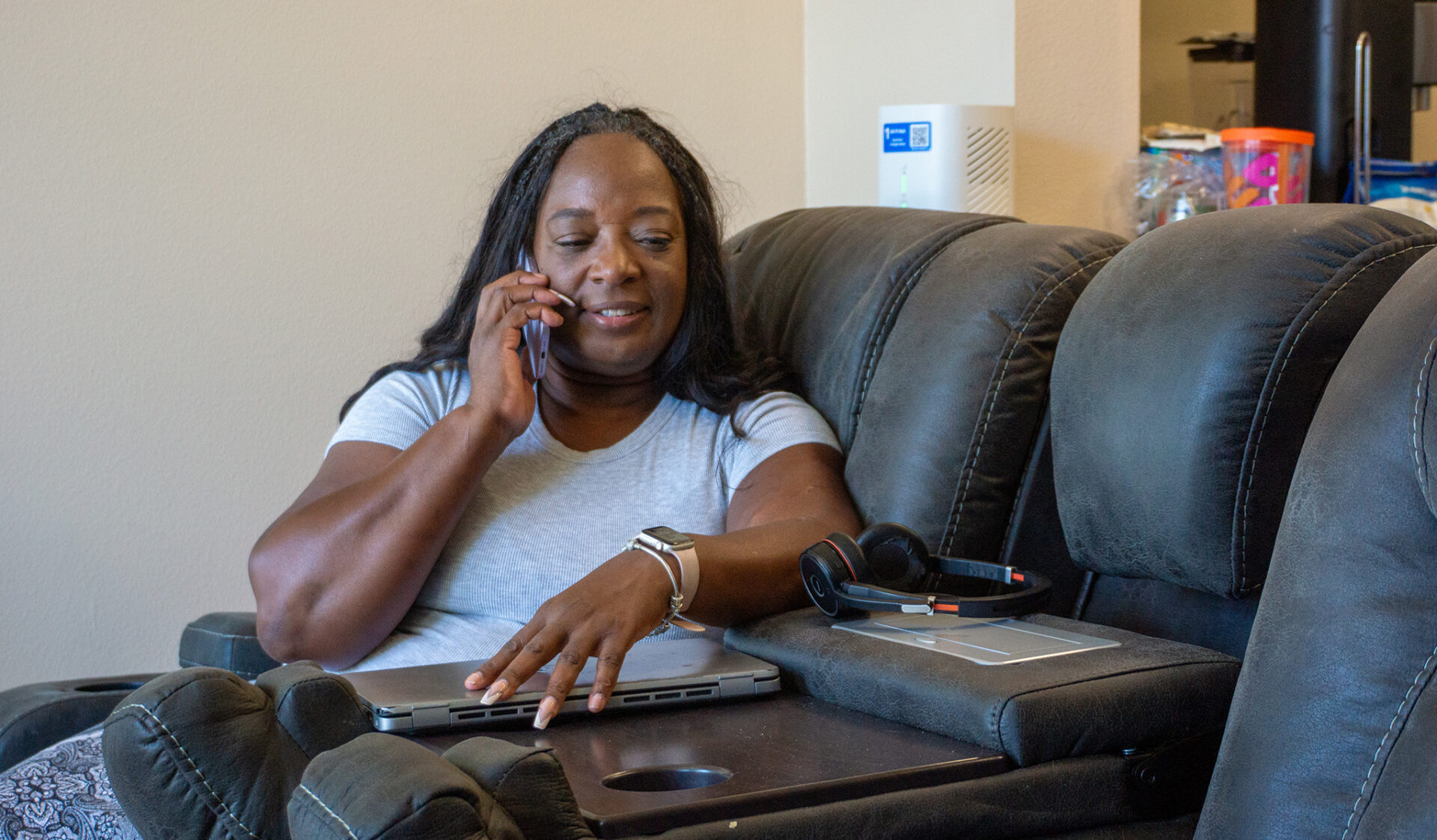

Easing the Burden for a San Diego Grandmother
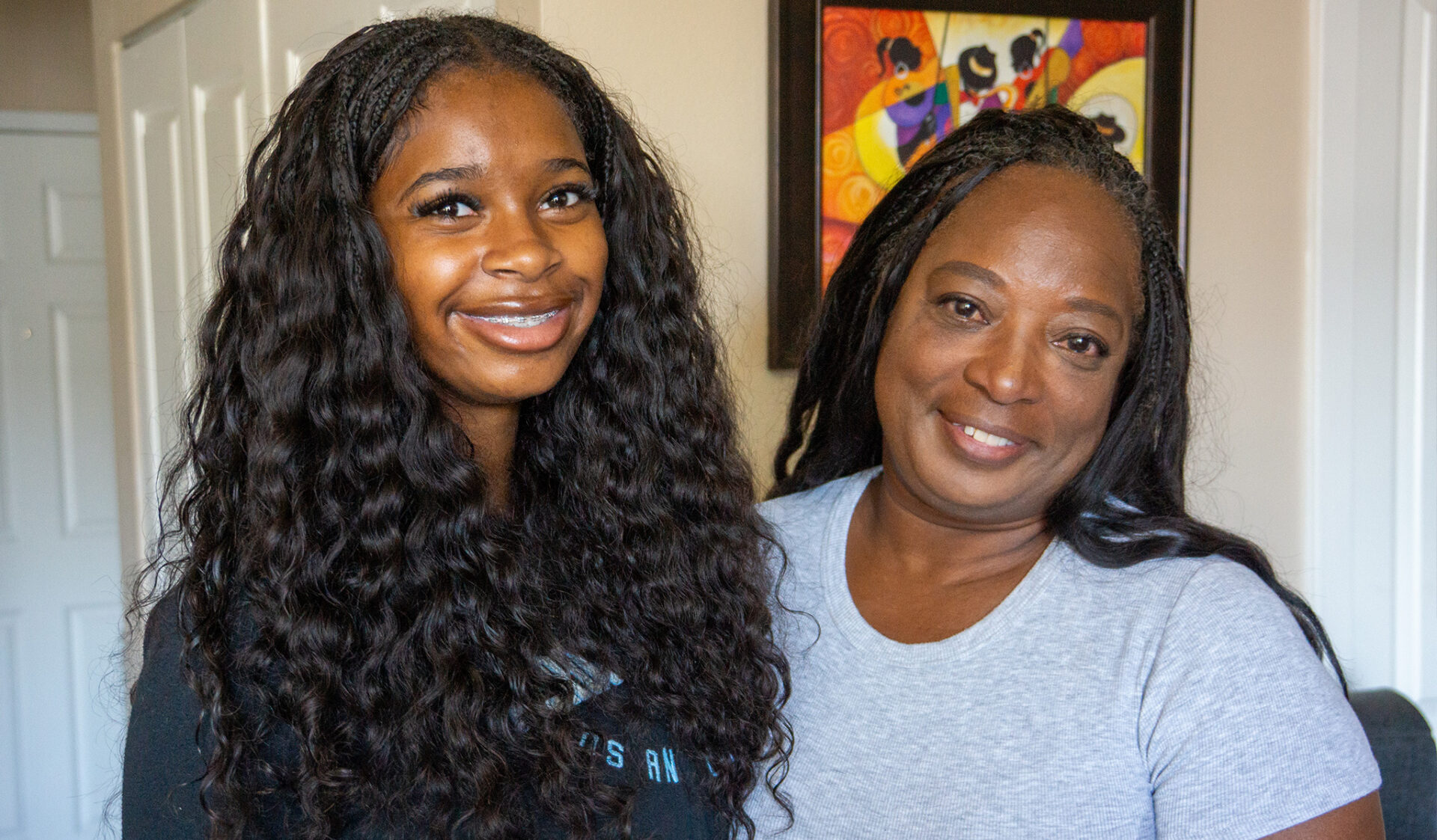
With help from SDHC’s Housing Instability Prevention Program (HIPP), Desiree and her teenage granddaughter now have a more affordable, stable rental home in “the center of everything” in East Village and better prospects for the future.
“I was lifted out of this financial black hole,” said Desiree, who was spending 65 percent of her income toward rent at a Cortez Hill apartment before she received help from HIPP. “I had literally maxed out all my credit cards. Now, because of the program, not only am I in here, I can restabilize myself. I can pay my credit cards down. I’m in a place where they’re helping me.”
HIPP helped Desiree move into her new place and provide a safe space for her 15-year-old granddaughter, Jenna, who now has her own room as she is in her first year at a new high school, and an impressive Italian Daniff that they take on walks around their new community.
Desiree said she’s thankful for the support she received from her SDHC housing specialist, who clearly explained the HIPP guidelines and expectations up front so she would know what to expect.
“The program is like someone on the sideline that lifts you up on your feet. You still got the weight. You still have to pay your rent. You still have to pay your lights. You still have to go to the grocery store,” Desiree said. “But what the program does is they stand behind you and lift the weight up. So now you’re not on your knees crawling anymore, you’re standing, walking. They take a little bit of the burden off and you go from crawling to walking. Now you’re in a full stride headed to that finish line.”

Finding Stability for a Mom and Her Teen Son
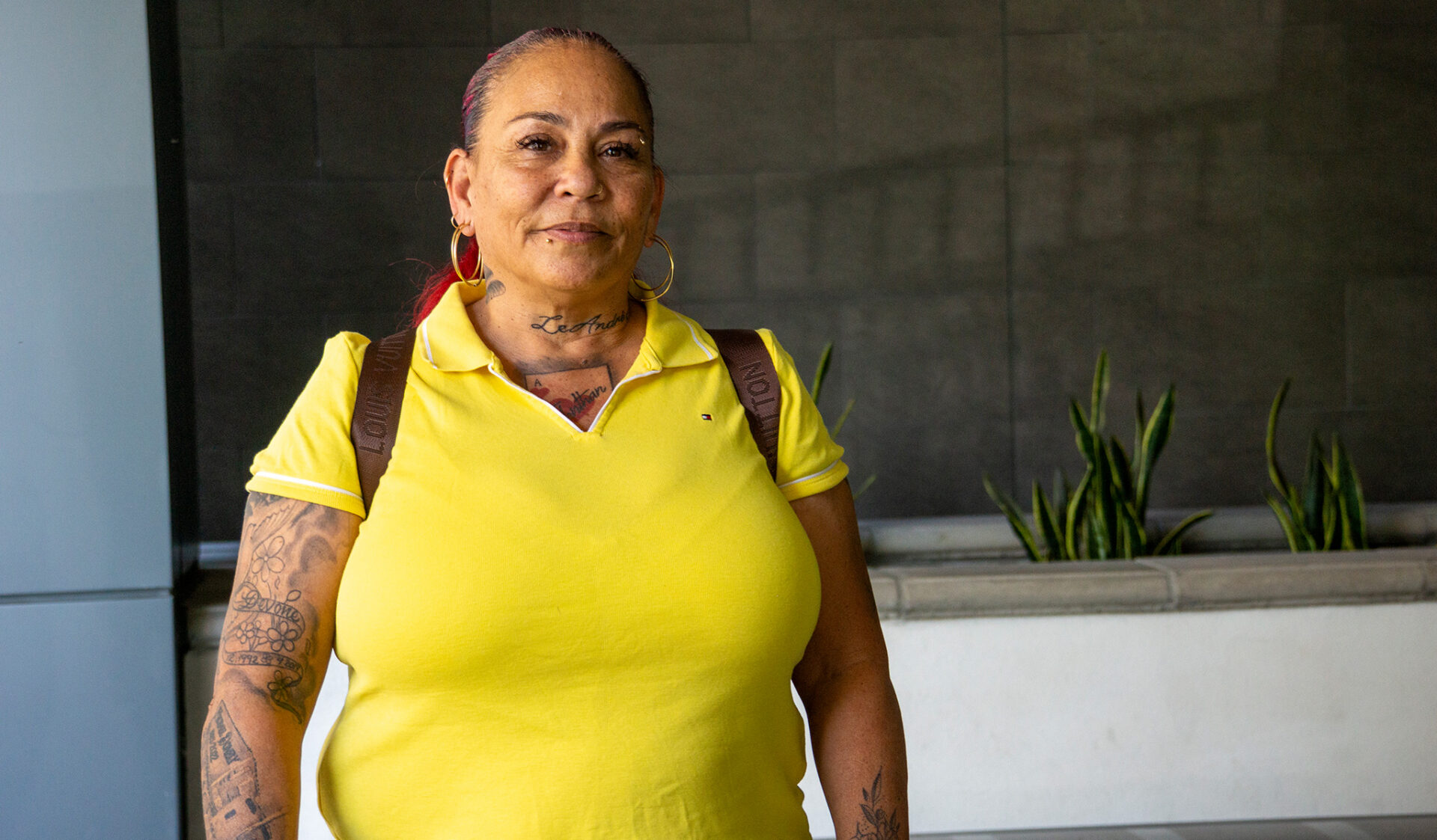
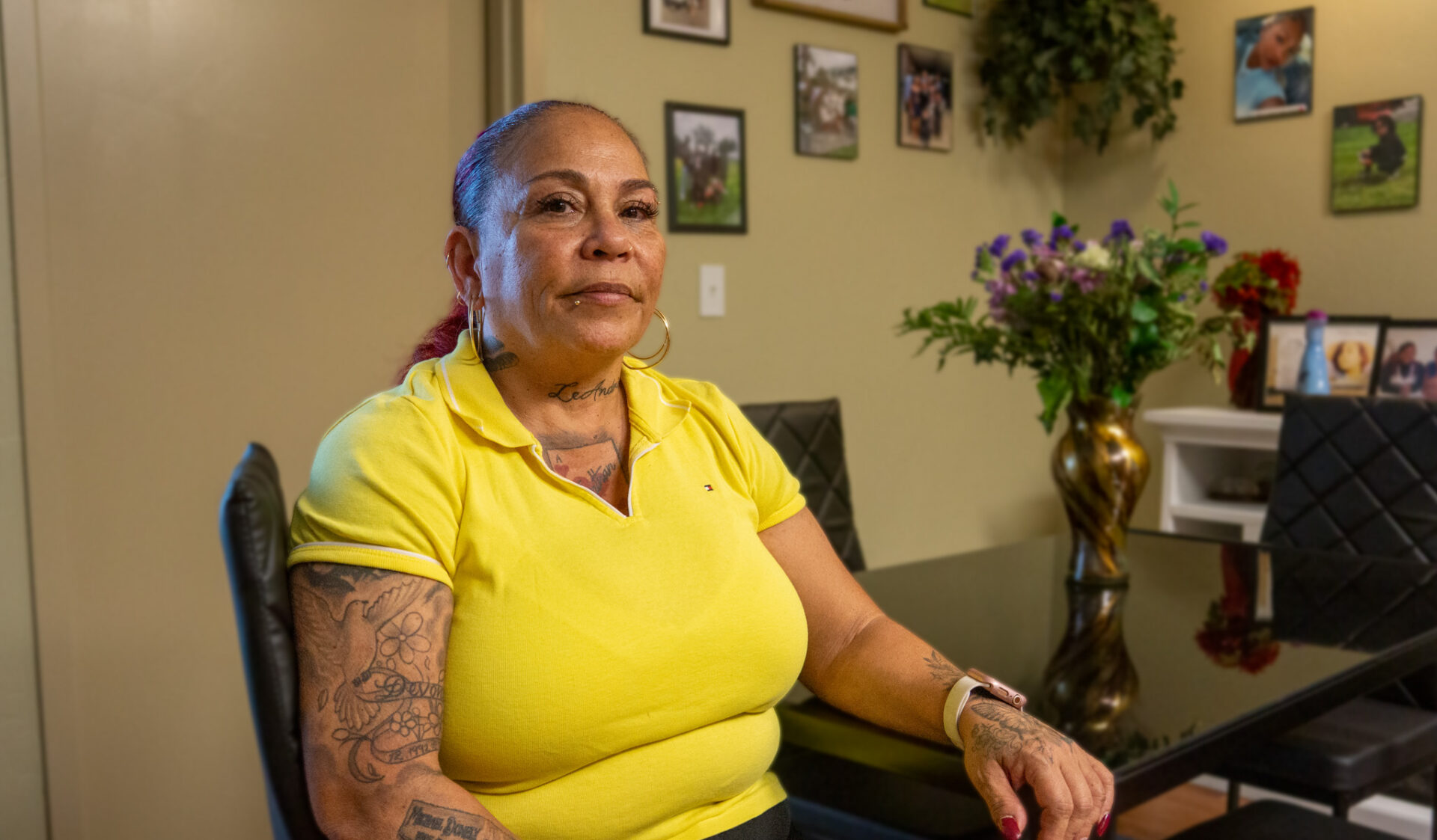
An affordable, two-bedroom apartment in Downtown San Diego’s Cortez Hill neighborhood was life-changing for Sherri and her teenaged son.
“Moving in here is so far the best thing that’s happened to me in my life right now,” Sherri said just weeks after moving in.
With the short-term rental assistance, counseling and resources she received from SDHC’s Housing Instability Prevention Program (HIPP), Sherri, who worked at a home improvement store, no longer worried about being unable to pay her rent.
That wasn’t the case at her previous apartment, which allowed Sherri to get out of a homelessness shelter but at the expense of heavy debt. She knew she needed a more affordable housing option before her two years in HIPP would end.
The development she moved to included 202 apartments required to be affordable for San Diegans earning 30 to 60 percent of San Diego’s Area Median Income, currently $42,000 to $84,000 per year for a two-person household like hers.
Under HIPP, an SDHC case manager helped Sherri with budgeting and provided information on applications for affordable apartments during her housing search, including ways to identify affordable rentals.
“You have to be diligent. You have to be on it. You have to do the footwork. If it takes 10 applications, if it takes you to be on the waiting list at 50 places, do it. You don’t know when that waiting list will fall off or your name just goes up,” she said.
Sherri said she hoped her story might serve as an example to other people struggling with housing to reach out for help, but also to be ready to put in the effort to check in with SDHC staff to set themselves up for success. After receiving help from HIPP, Sherri was able to exit the program.
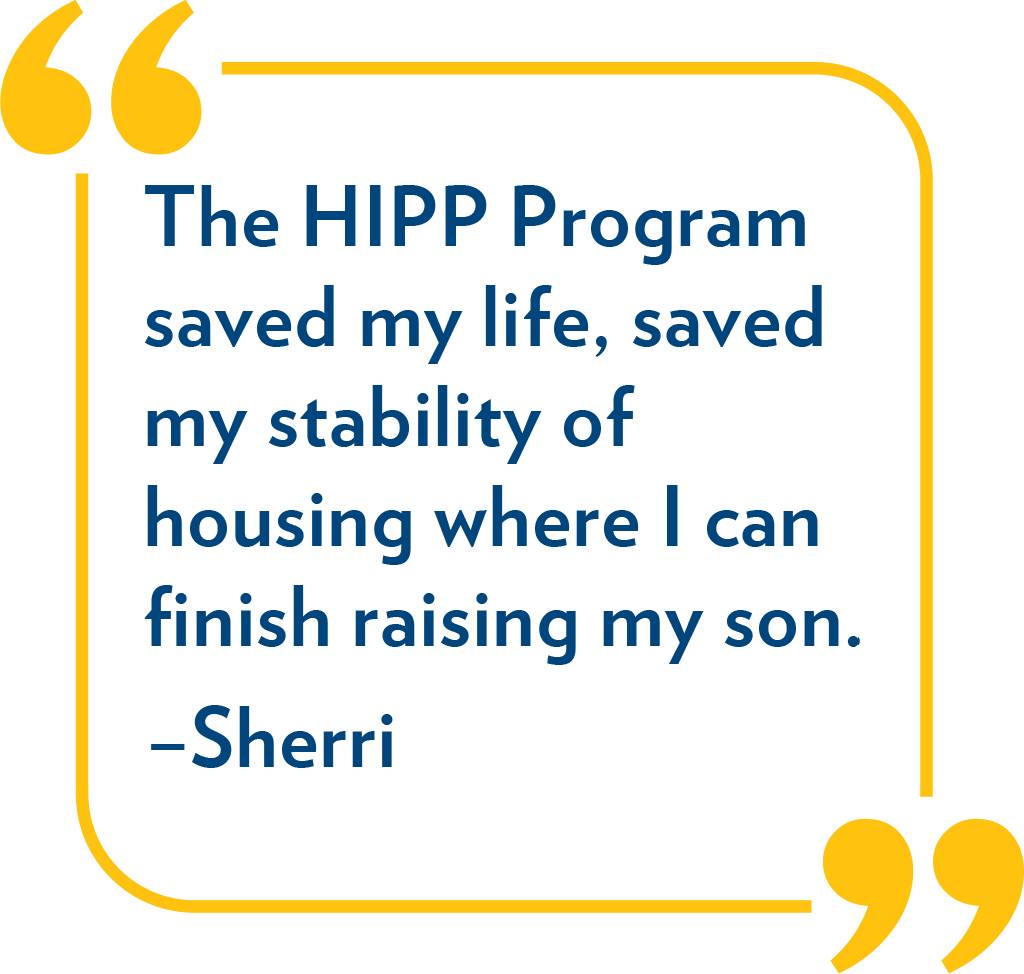
“The HIPP Program saved my life, saved my stability of housing where I can finish raising my son,” Sherri said.
Stabilizing Tenancy for Elderly Populations
SDHC’s Stabilizing Tenancy for Elderly Populations (STEP) program works to prevent homelessness among seniors aged 55 and older who are living on extremely low or fixed incomes. The program helps seniors who achieved housing stability in HIPP but need ongoing assistance to remain stable. They are not able to increase their income due to their age or disabling conditions.
STEP assists up to 100 seniors by continuing to provide a flat amount of financial assistance each month toward their rental housing costs. The program also provides access to supportive services, as needed, for the participating seniors. Transitioning these seniors from HIPP to STEP will also free up resources in HIPP to help more households in need.
Philanthropic support from Price Philanthropies and Green Vistas provides the funding for STEP to operate.
FY 2026
Homelessness Prevention and Diversion
SDHC’s Homelessness Prevention Program staff collaborate with households at imminent risk of homelessness and their landlords to help individuals and families remain stably housed. SDHC’s Diversion Program staff work with eligible households that are homeless and accessing the homelessness crisis response. Diversion staff help households identify safe and immediate alternative housing options and submit relevant referrals for services and financial resources to help the household stabilize in permanent housing. SDHC’s Prevention and Diversion programs are in addition to the Diversion Collective initiative.
Eviction Prevention Program
Renters with low income who face eviction for not paying their rent can receive help in the City of San Diego from the Eviction Prevention Program. SDHC contracts with Legal Aid Society of San Diego to operate the program, funded by the City of San Diego. The program offers full legal representation, limited legal services and other services or resources for eligible tenants.
Full Legal Representation
- Pre-eviction and eviction process
- Settlement negotiations
- Trial, if necessary
Limited Legal Services
- Submitting formal responses to eviction notices
- Formal responses to Unlawful Detainers
- Requests for reasonable accommodations
FY 2026 (July 1, 2025 – June 30, 2026)
MOVING HOME RAPID REHOUSING
The Moving Home Rapid Rehousing program works to quickly rehouse individuals and families experiencing homelessness and then provide case management services to help them achieve housing stability. Services offered through the program are time-limited. Services may include housing location services; case management; rental assistance (including rental arrears); financial assistance (including application fees, utility payments, moving costs, and security deposits); and referrals to external resources and supports.
LANDLORD ENGAGEMENT AND ASSISTANCE PROGRAM (LEAP)
The Landlord Engagement and Assistance Program (LEAP) assists households experiencing homelessness by providing incentives and benefits to landlords who rent to San Diegans experiencing homelessness and by providing security deposit assistance. Participants are currently experiencing homelessness, enrolled in housing programs and referred by partnering community organizations.
| LEAP Incentives and Benefits |
|---|
| Move-in cost assistance, such as security deposits, holding fees, application fees, utility deposits and payment of overdue utility costs |
| $500 for the first unit landlords rent to a household experiencing homelessness and $250 for each additional unit |
| A Landlord Contingency Fund that helps landlords cover expenses, such as repairs, unpaid rent, and legal fees that exceed the security deposit. |
| Dedicated SDHC housing specialists to answer landlords’ questions |
COMMUNITY ACTION PLAN ON HOMELESSNESS
The Community Action Plan on Homelessness for the City of San Diego continues to guide long-term decisions in addressing homelessness by identifying the needs in the homelessness response system and maintaining a system-wide focus. An update on progress toward addressing those needs was presented to the San Diego City Council in October 2026.
The Community Action Plan on Homelessness is a comprehensive, 10-year plan that builds on progress, lays out short-term achievable goals, and serves as a guide for long-term success in addressing homelessness. SDHC, the City of San Diego and the San Diego Regional Task Force on Homelessness have collaborated on previous updates to the City Council about the plan in 2023 and 2025.

5,924 in 2019

11,572 in 2026
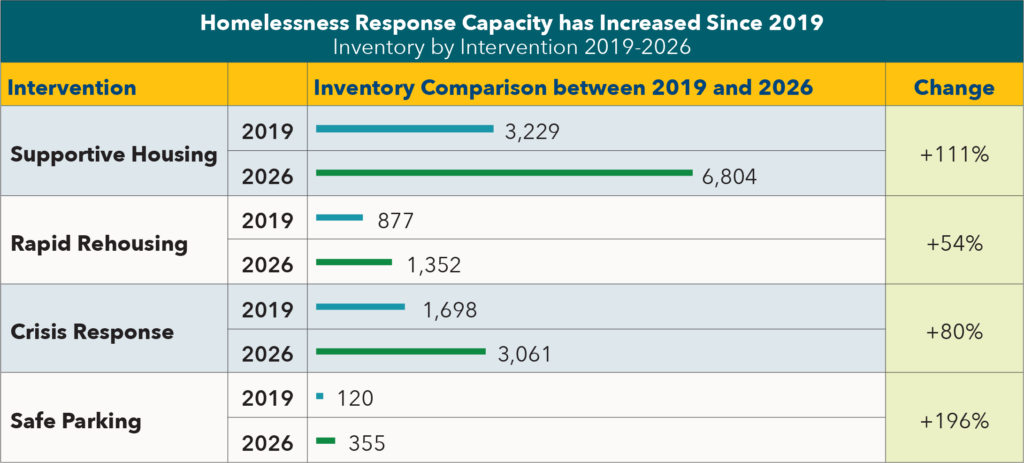
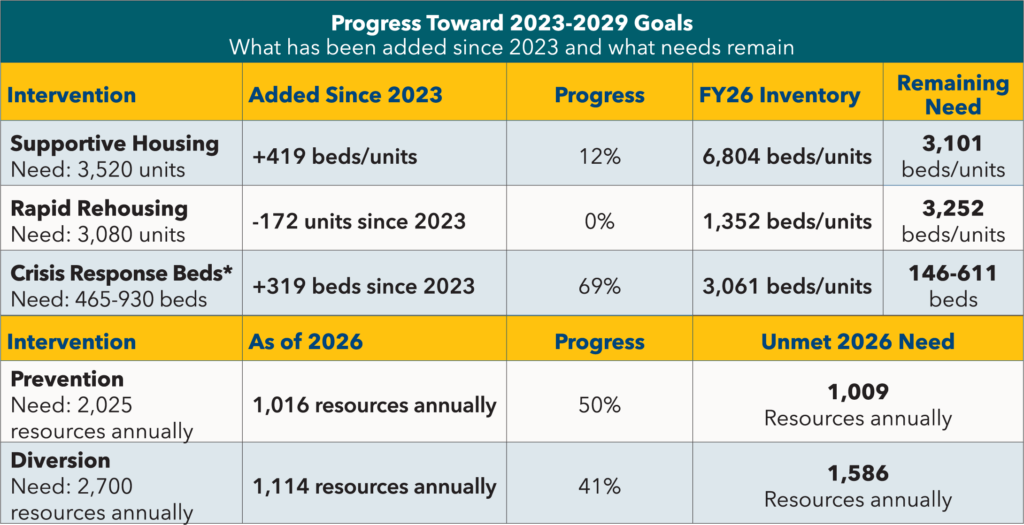
*Crisis Response beds added since 2023 include Safe Sleeping and Safe Haven beds/units. These beds/units are also included in the Crisis Response Beds FY26 inventory.
State Homekey and Homekey+ Funds
As the only applicant in the San Diego region to be awarded funds in every round of the State of California’s Homekey and Homekey+ programs, SDHC has collaborated with the City of San Diego, County of San Diego and additional partners to create hundreds of new affordable rental homes with supportive services for unhoused San Diegans since 2020.
Pacific Village
Veterans, transition-age youth and additional San Diegans who lived in their cars, in shelters or on the streets now have their own furnished affordable rental homes with access to supportive services at a former motel that SDHC converted into 62 furnished studio apartments at the property now known as Pacific Village.
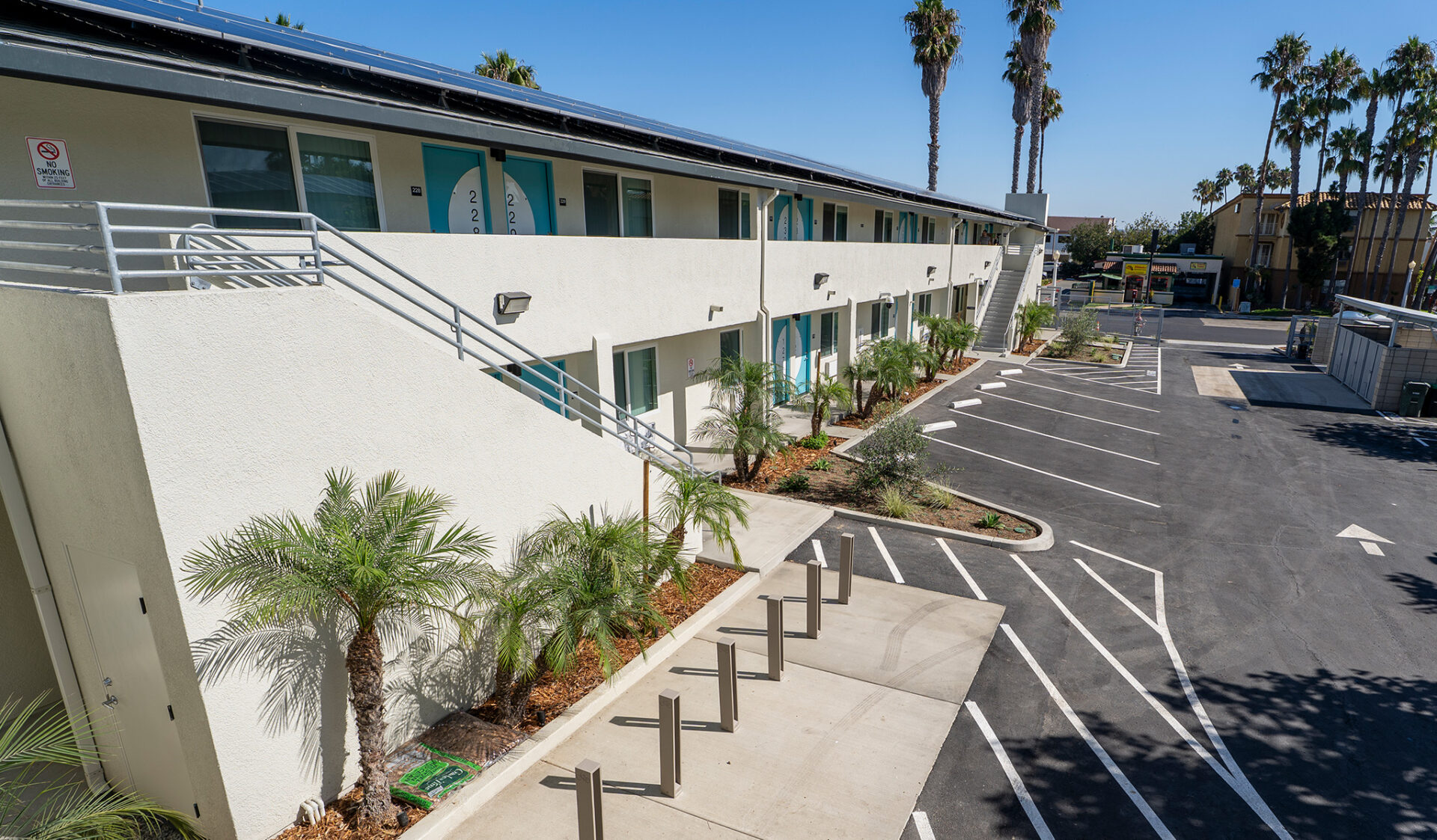
Developer: SDHC
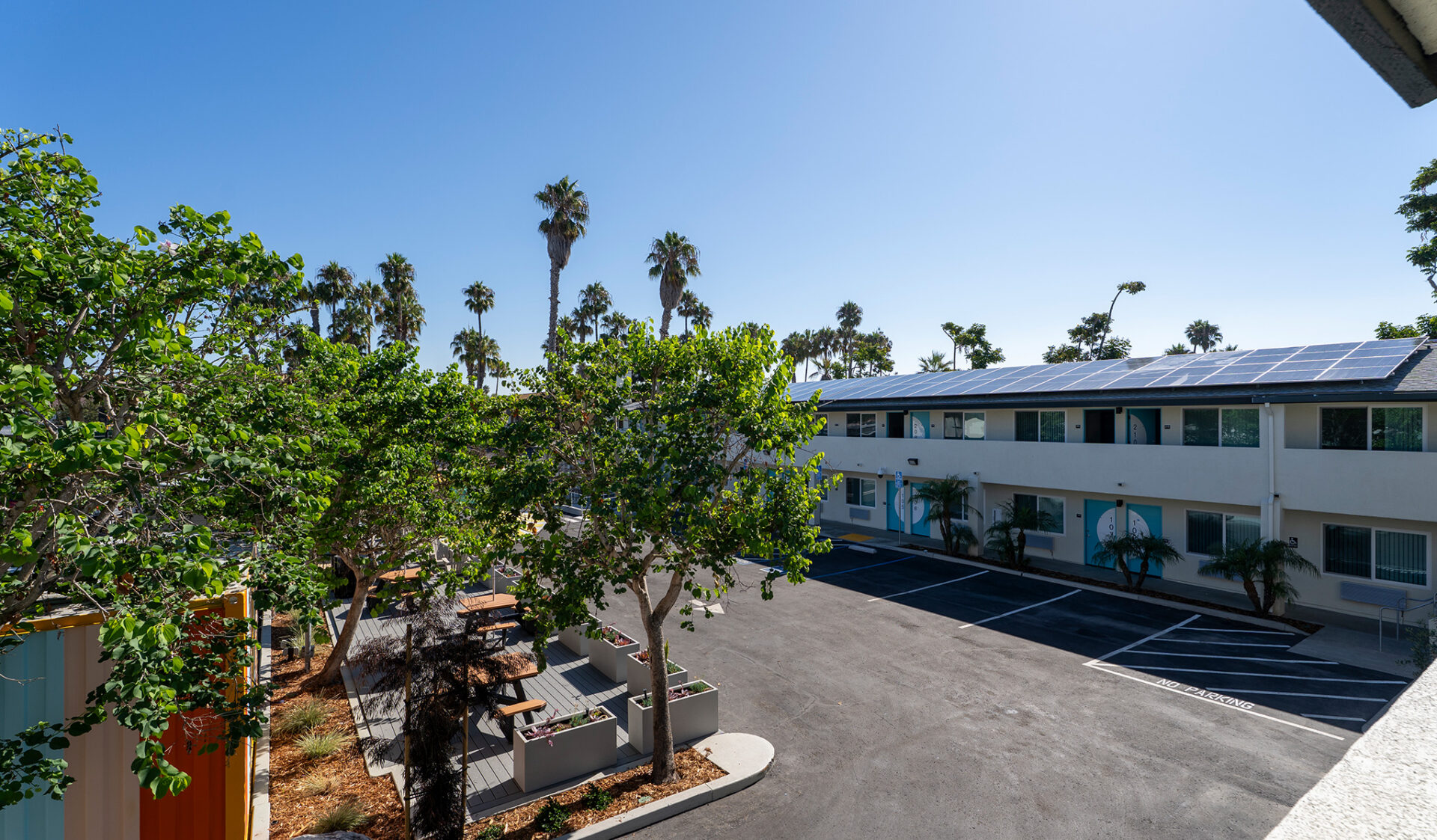
Financing:
- State Homekey Program: $16.85 million
- City of San Diego: $5.92 million
- County of San Diego: $5.92 million
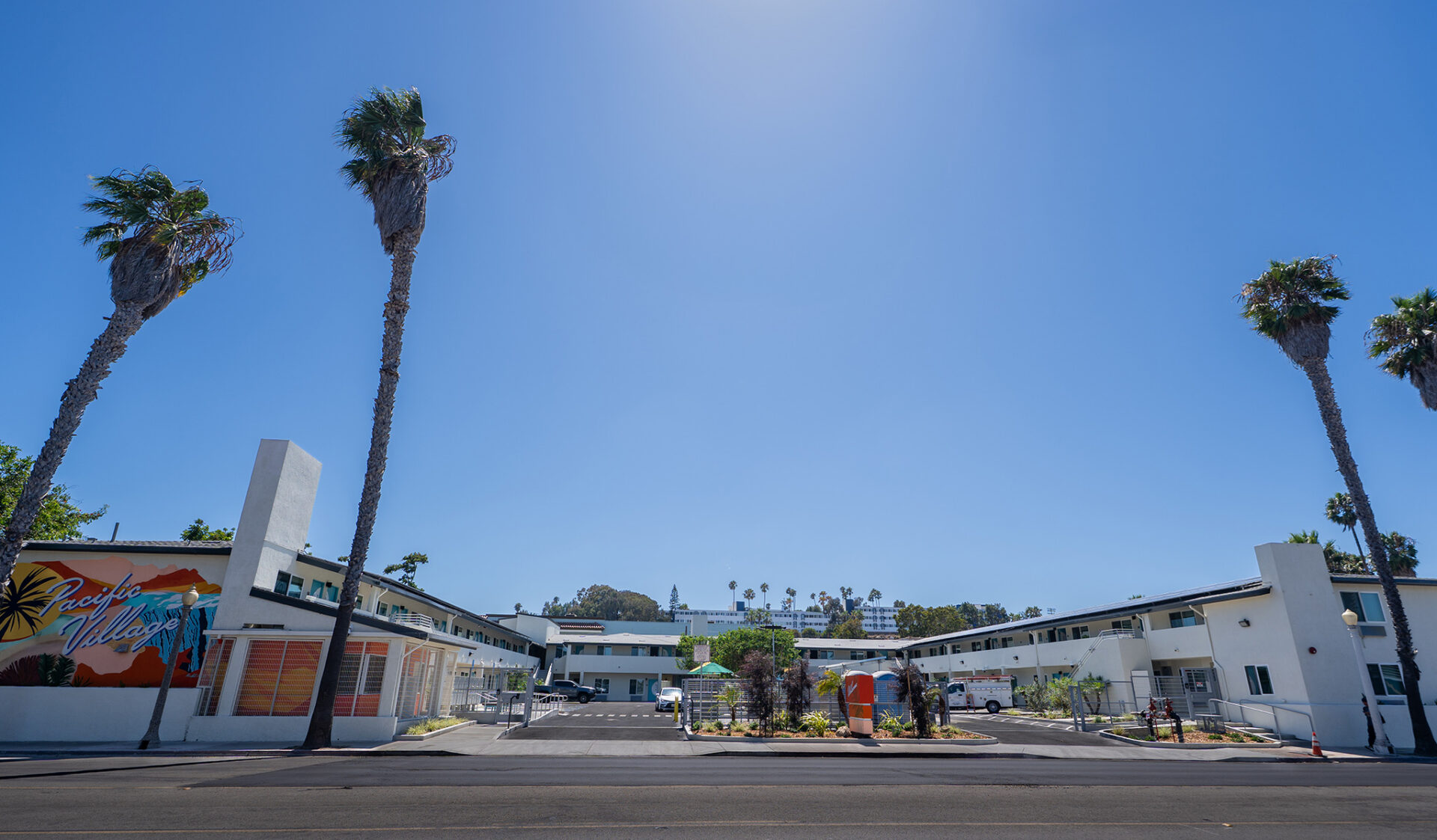
SDHC committed 62 project-based housing vouchers to help residents pay their rent.
County of San Diego supportive services funding: $4.98 million
Grand Opening
- October 9, 2025
- Participants and attendees included:
- San Diego Mayor Todd Gloria
- San Diego City Council President Joe LaCava
- San Diego City Councilmember Dr. Jennifer Campbell
- San Diego County Deputy Chief Administrative Officer for the Health and Human Services Agency Dr. Kimberly Giardina
- California Department of Housing and Community Development Assistant Deputy Director Tim Parham
- SDHC Commissioner Stephen Cushman
- SDHC President and CEO Lisa Jones
- Telecare Team Supervisor Jordan Garcia
Aerial photo by Alex Nye
Property Improvements
- Vibrant signage and mural from a San Diego-based artist
- Shaded outdoor gathering space
- Fenced pet relief area
- Installation of kitchenettes in all units
- Addition of fire sprinkler and alarm systems
- Upgrades to existing utilities and building systems to extend useful life and accommodate new kitchenettes and fire systems
- Upgrades to life safety systems
- Security additions, including the installation of cameras and perimeter fencing
- Plumbing fixture replacement
- Roof replacement
- Installation of rooftop solar panels to offset electric energy use to the benefit of the entire property, as well as battery storage for the property
- Painting of the interior and exterior of the building
- Accessibility upgrades, including path of travel to units and common areas
- Termite fumigation and repairs
Starling Place
In March 2026, SDHC completed its purchase of Starling Place, which will undergo building updates to provide 80 affordable rental homes with supportive services for people experiencing homelessness. The State of California announced in October 2025 that it had awarded $32.4 million in Homekey+ funds to SDHC for the purchase, building updates and operating subsidy.
The City of San Diego is investing $11.5 million toward the Starling Place project, and the County of San Diego is investing $12.5 million, consisting of $7 million in capital funds and $5.5 million for ongoing operating expenses, including support for non-veteran households that will reside at the property.
In addition to buying and owning the property and overseeing the building updates, SDHC has committed 40 Veterans Affairs Supportive Housing (VASH) Project-Based Vouchers to assist veterans at the property to pay their rent. The U.S. Department of Veterans Affairs (VA) San Diego Healthcare System will provide supportive services for the veterans at Starling Place in conjunction with the housing vouchers.
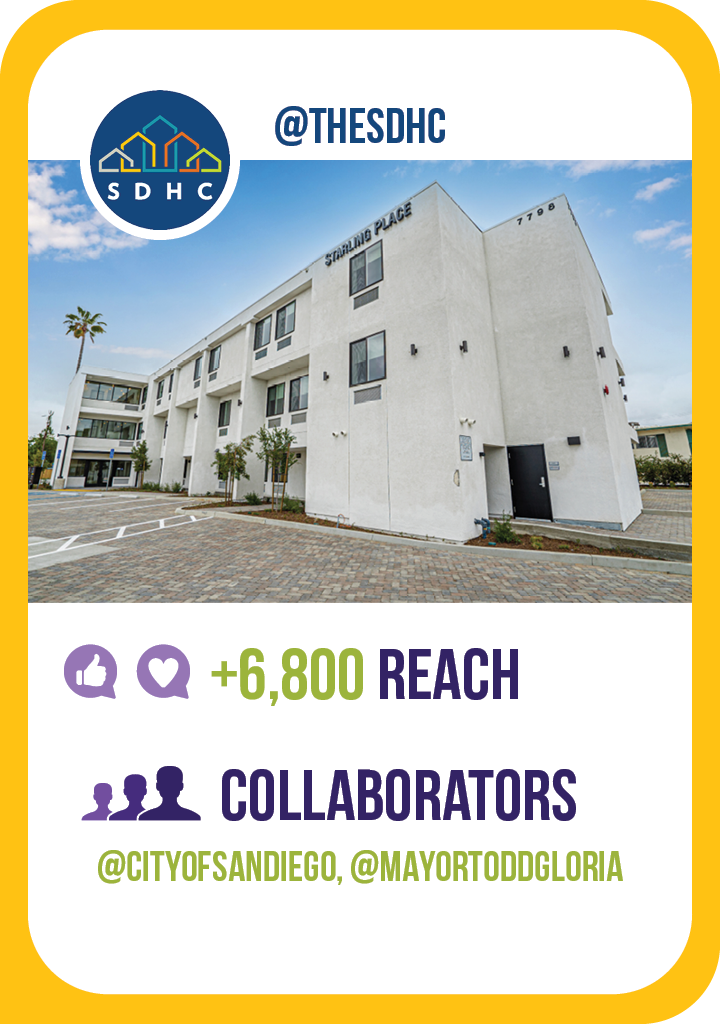
SDHC Developments with Homekey / Homekey+ Funds
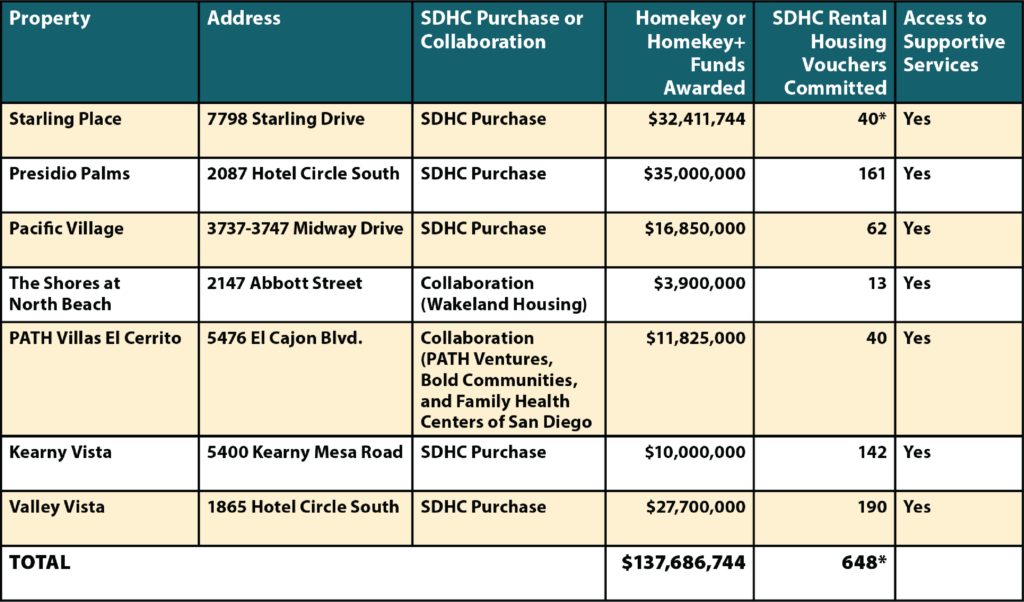
*Starling Place will consist of 80 permanent affordable rental housing units with supportive services for people experiencing homelessness, of which 40 will be supported with Veterans Affairs Supportive Housing Vouchers. The Homekey+ funds awarded to SDHC consist of capital funds and operating subsidy.
CITY OF SAN DIEGO HOMELESSNESS SHELTERS AND SERVICES
SDHC continues to administer City of San Diego homelessness shelters and services programs under the terms of a Memorandum of Understanding between SDHC and the City.
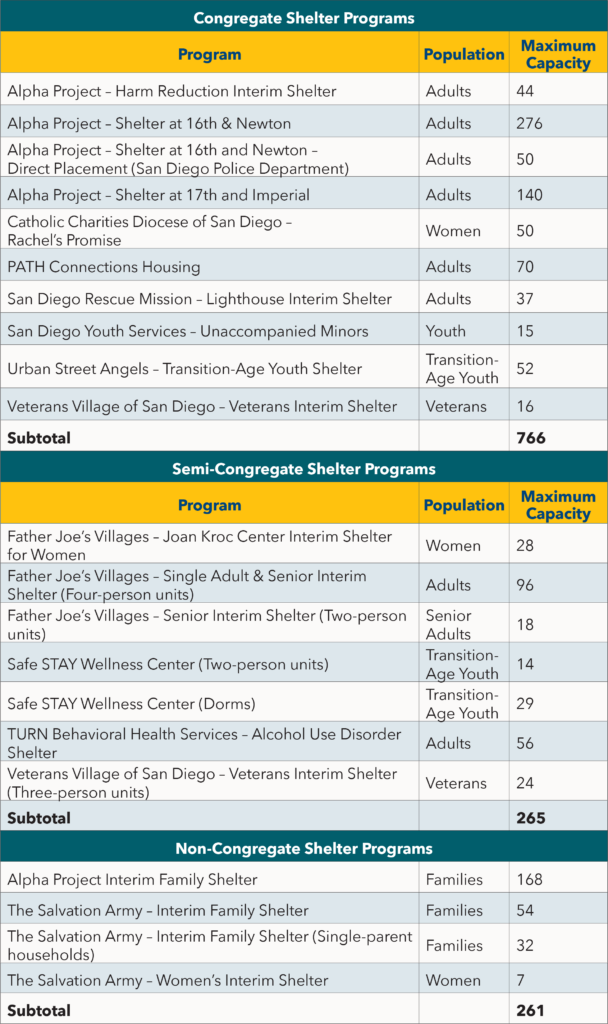
*Total does not include Safe Sleeping and Safe Parking programs, which the City of San Diego Homelessness Strategies and Solutions Department administers.
UPDATE: More Shelter Beds for Women and Children
During FY 2026, work continued on the site of Rachel’s Promise Center for Women and Children to increase the number of shelter beds serving unhoused women and women with children in the City of San Diego. The addition of 160 beds for these vulnerable populations was announced in August 2026.
The City of San Diego funds the Rachel’s Promise program, and SDHC contracts with Catholic Charities, Diocese of San Diego to operate Rachel’s Promise. SDHC also provided technical assistance to ensure that tenant improvements at the site aligned with the shelter program’s design and operating practices, worked with Catholic Charities and the City of San Diego on the process of reviewing and issuing necessary permits, and worked closely with Catholic Charities’ staff on the composition of the shelter spaces and the populations served at the site.
With decades of commercial real estate development experience, property owners Dene Oliver and Jim McMillan worked closely with Catholic Charities on the site design and tenant improvements needed to expand the program’s shelter capacity and create semi-congregate and non-congregate shelter space designed to enhance safety, privacy and dignity for women and children. They also donated furniture and office equipment from the former office site to support ongoing operations and create a welcoming environment.
Rachel’s Promise Announcement of More Shelter Beds
- August 12, 2026
- Participants and attendees included:
- San Diego Mayor Todd Gloria
- SDHC President and CEO Lisa Jones
- Bishop of San Diego Michael M. Pham
- Catholic Charities, Diocese of San Diego CEO Appaswamy “Vino” Pajanor
- Property owners Dene Oliver and Jim McMillan
- San Diego County District Attorney Summer Stephan
- Shelter capacity increased from 50 beds for single women to 210 beds—110 beds for single women and 100 beds for women with children.
- The City of San Diego funds the shelter program.
- SDHC contracts with Catholic Charities, Diocese of San Diego to operate the program.
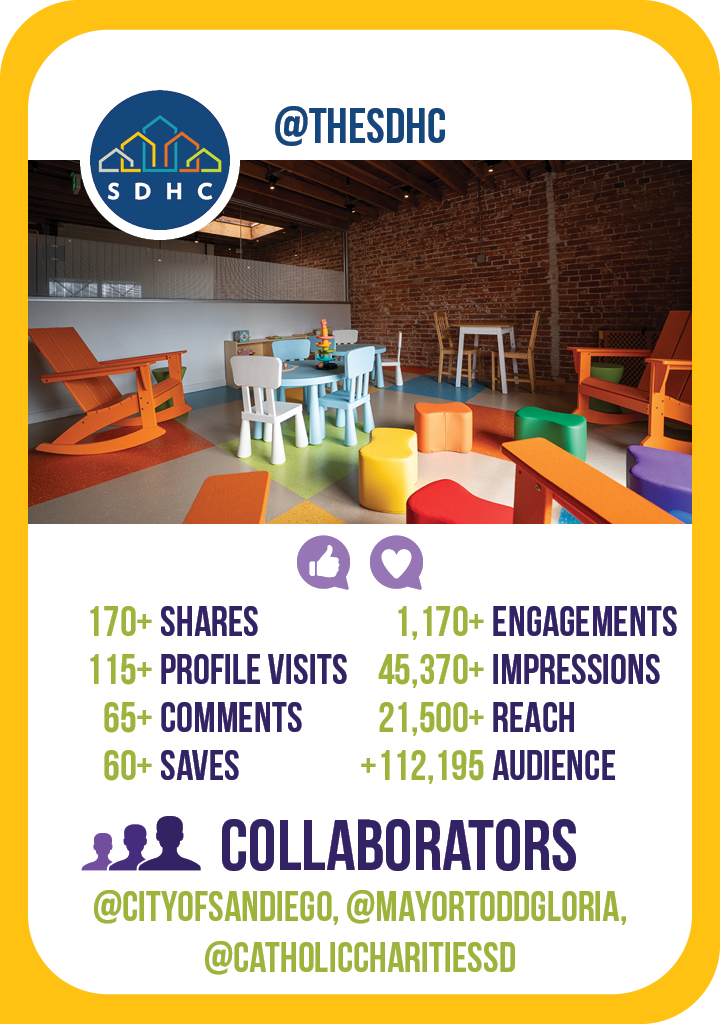
Building Momentum for the Future
Three months at Rachel’s Promise Center for Women & Children gave Jennifer a roof over her head when she had nowhere to go, along with the support, encouragement and sisterhood she needed to build momentum toward a more hopeful future.
“Last Friday I signed a lease for a new apartment. It’s affordable housing, so it’s a great rate,” said Jennifer, who asked not to use her real name. A rapid rehousing program will also be assisting her in her new rental home.
A digital marketer, Jennifer sought help after she drained her resources while applying for jobs unsuccessfully. Identifying as part of the LGBTQ community, Jennifer said she could not count on her family’s support.
“When I first came to Rachel’s Promise, I was pretty down and out and pretty sad,” Jennifer said. “It was probably the lowest point that I’d gone through. And I think that this location has helped me heal, has helped rebuild my confidence. I’ve learned how to kind of smile again.”
Ten days after calling 2-1-1 for help, Jennifer moved into Rachel’s Promise.
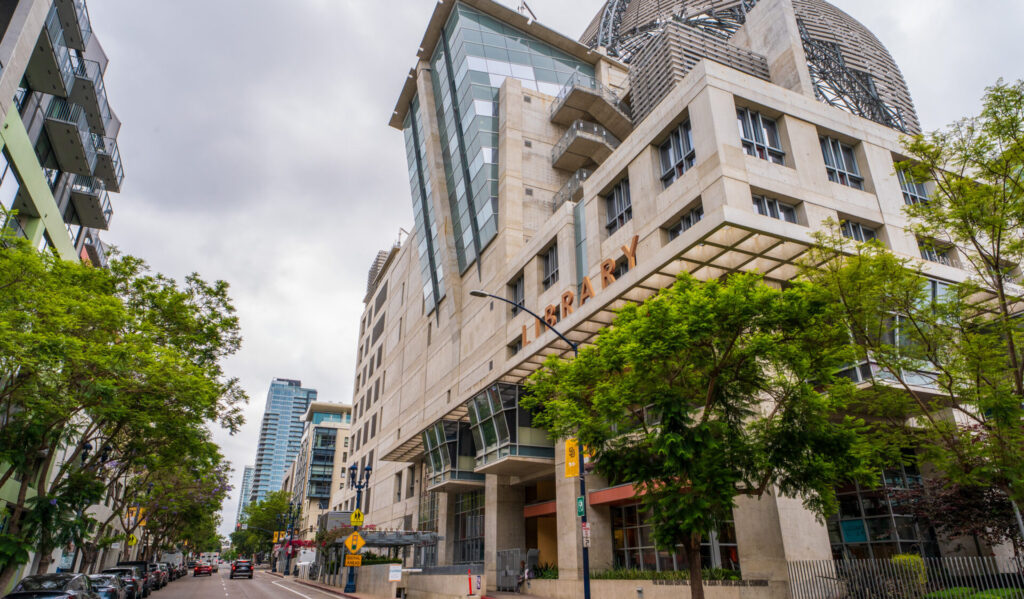
“Those 10 days were the hardest of my life. I slept on a shower stall floor and used the library to work from during the day. But I was tired, I was hungry, and it was a pretty low point,” Jennifer said.
At Rachel’s Promise, Jennifer said she received help from the staff and case managers and had access to services, such as bus passes, clothing, and help with her resume and transportation to job fairs and interviews. She is also grateful for the relationships with staff and her fellow shelter residents.
“The other women help you heal. You share each other’s stories. You could be real about where you’re at in life. And the staff is there to support you, meet you where you’re at, and help you create the momentum and the strength to kind of move on to the next phase of life.”

I’ve been able to sleep under a roof. That was my biggest thing. I just got a job, so I've been able to be here, and job hunt – every day on interviews. So, I just got a job yesterday, and I'm going to be getting… help with housing.”
—Kimberly, a Rachel’s Promise resident focused on finding housing after securing a job in store theft prevention
I have a single bed. I have three roommates and a little puppy dog. And I have a case manager who comes to see me as well as all the other ladies. (They) come around, make sure I'm comfortable, make sure I'm getting enough rest when I need to and stuff like that. They just take care of me.”
—Ruby, a grandmother and Rachel’s Promise resident preparing to move into an apartment of her own.
The Hub
Launched July 16, 2025, The Hub continues efforts from recent years to streamline and centralize the coordination and navigation of services for people experiencing homelessness in the City of San Diego while also updating and modifying the model for service delivery, as needed, to most effectively serve unhoused San Diegans.
SDHC contracts with the Downtown San Diego Partnership Foundation to serve as the lead service provider for The Hub, formerly known as the Homelessness Response Center. The City of San Diego funds The Hub.
The Hub leverages existing, client-focused, citywide contracts, resources, and case management to centralize and streamline connecting clients to supports in the homelessness response system. The Downtown San Diego Partnership Foundation partnered with 2-1-1 San Diego to receive referrals through 2-1-1, expanding the program’s reach across the city. The Hub also offered diversion assistance, modeled after SDHC’s Diversion program.
Inclement Weather Shelter Program
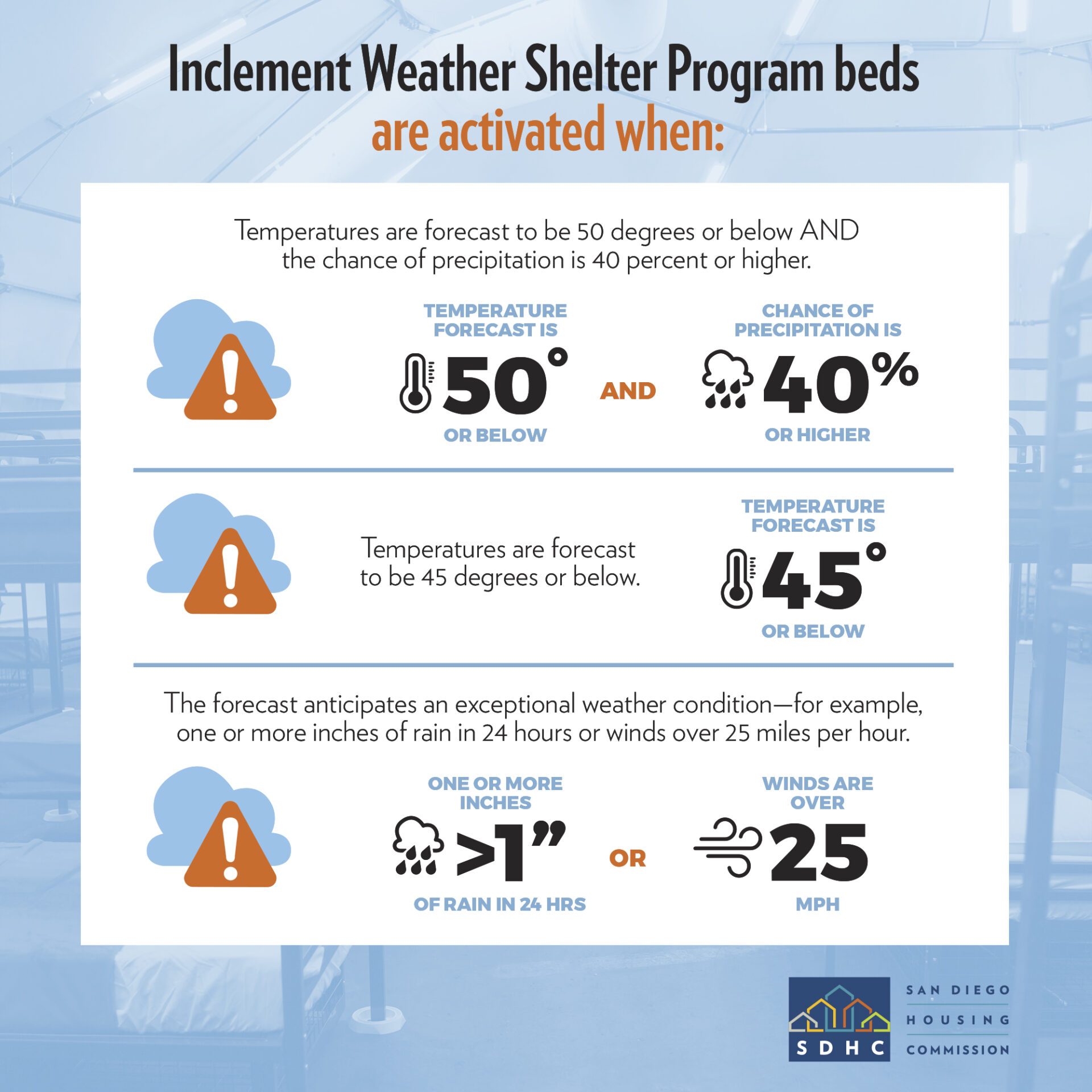
When bad winter weather is forecast in the City of San Diego, the Inclement Weather Shelter program provides more options for unhoused San Diegans to find a place to stay overnight with shelter from the cold or rain. SDHC collaborates with the City of San Diego, Father Joe’s Villages and Living Water Church of the Nazarene to make these additional homelessness shelter beds available when certain weather conditions are forecast. Service providers’ staffing and capacity each day determine how many beds become available.
November 1
March 31
How Individuals Heard about Inclement Weather Shelter
• 65% Word of mouth
• 33% Homelessness service providers, 2-1-1 San Diego, San Diego Police Department Homeless Outreach Team, and other sources
• 2% Returning clients
COORDINATED SHELTER INTAKE PROGRAM
The Coordinated Shelter Intake Program facilitates referrals to participating shelters in the City of San Diego to identify a bed that best meets the individual’s needs. SDHC’s Coordinated Shelter Intake Team facilitates intakes in conjunction with outreach teams, including the San Diego Police Department Neighborhood Policing Division’s Homeless Outreach Team (HOT).
=
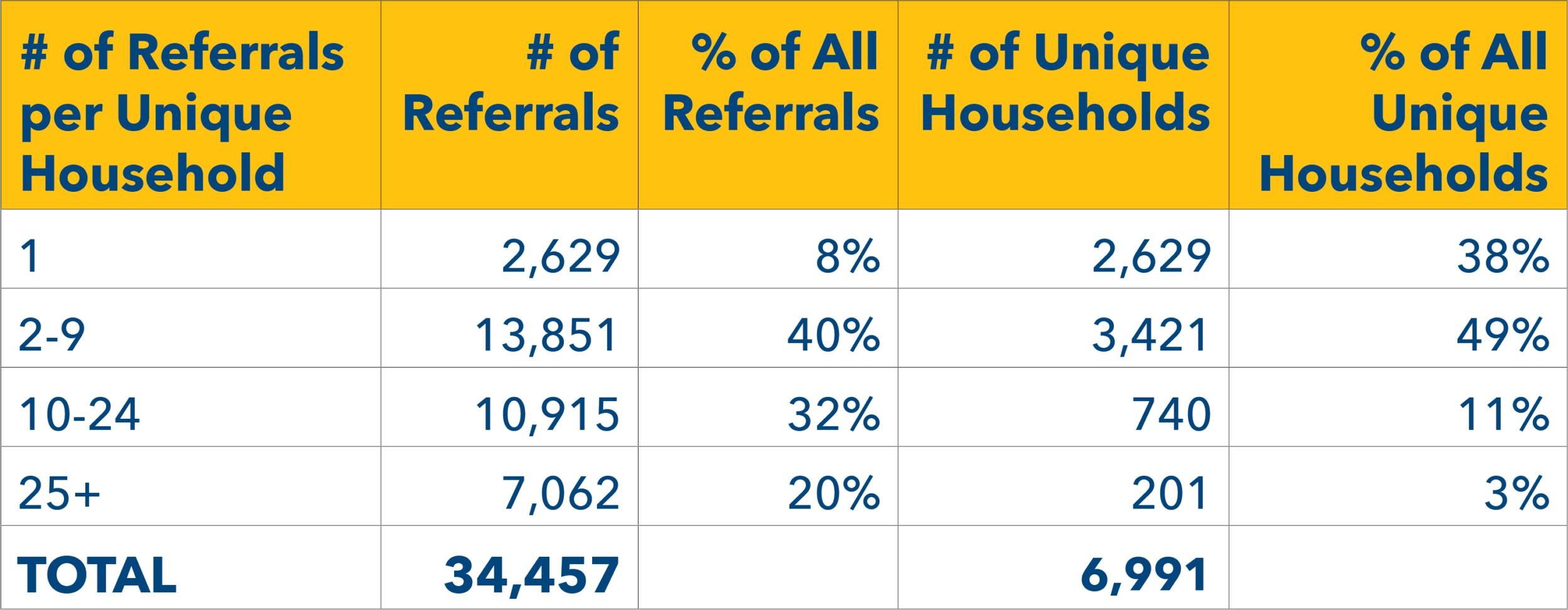
Shelter Referrals and Placements
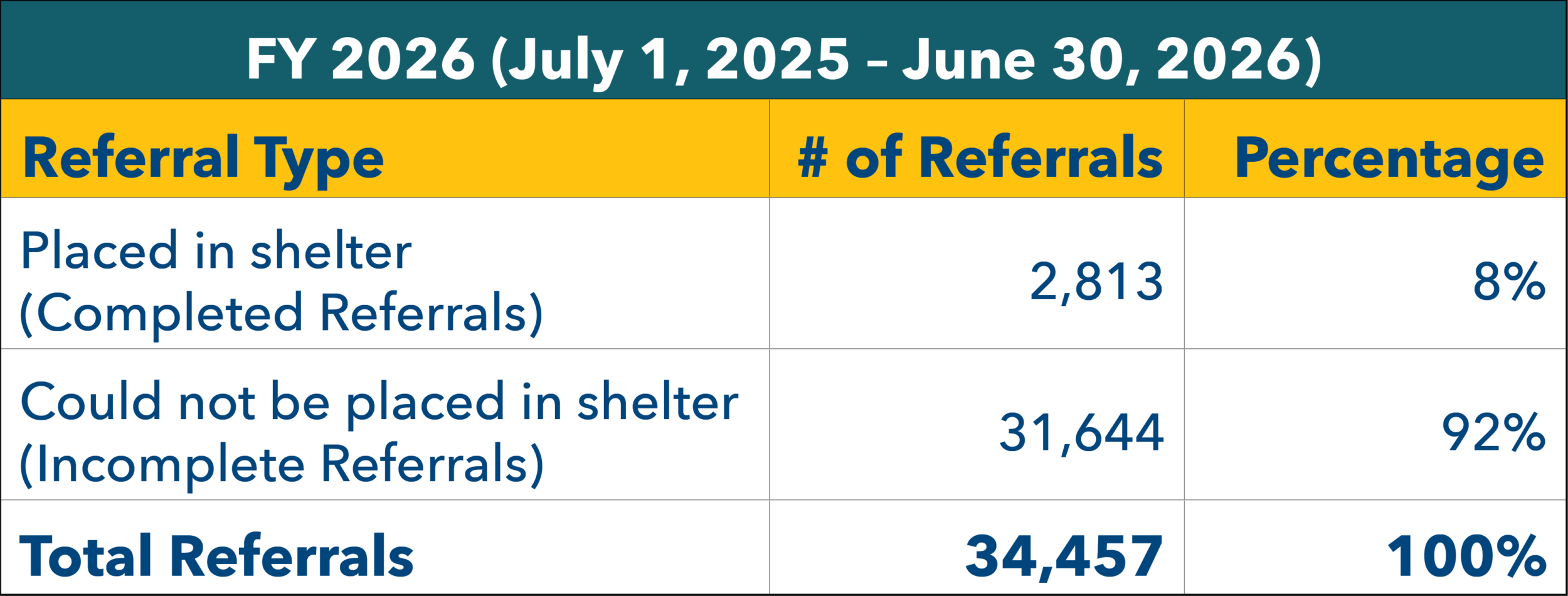
Total referrals are duplicative. An individual counted as an incomplete referral on one or more occasions may also be included as a completed referral upon shelter placement.
The methodology to calculate total referrals was revised in November 2025 to exclude invalid referrals, such as those submitted by a referring partner in error, during offline hours or on City/SDHC-recognized holidays. This resulted in a total reduction of 72 referrals between July 1, 2025, and November 30, 2025.
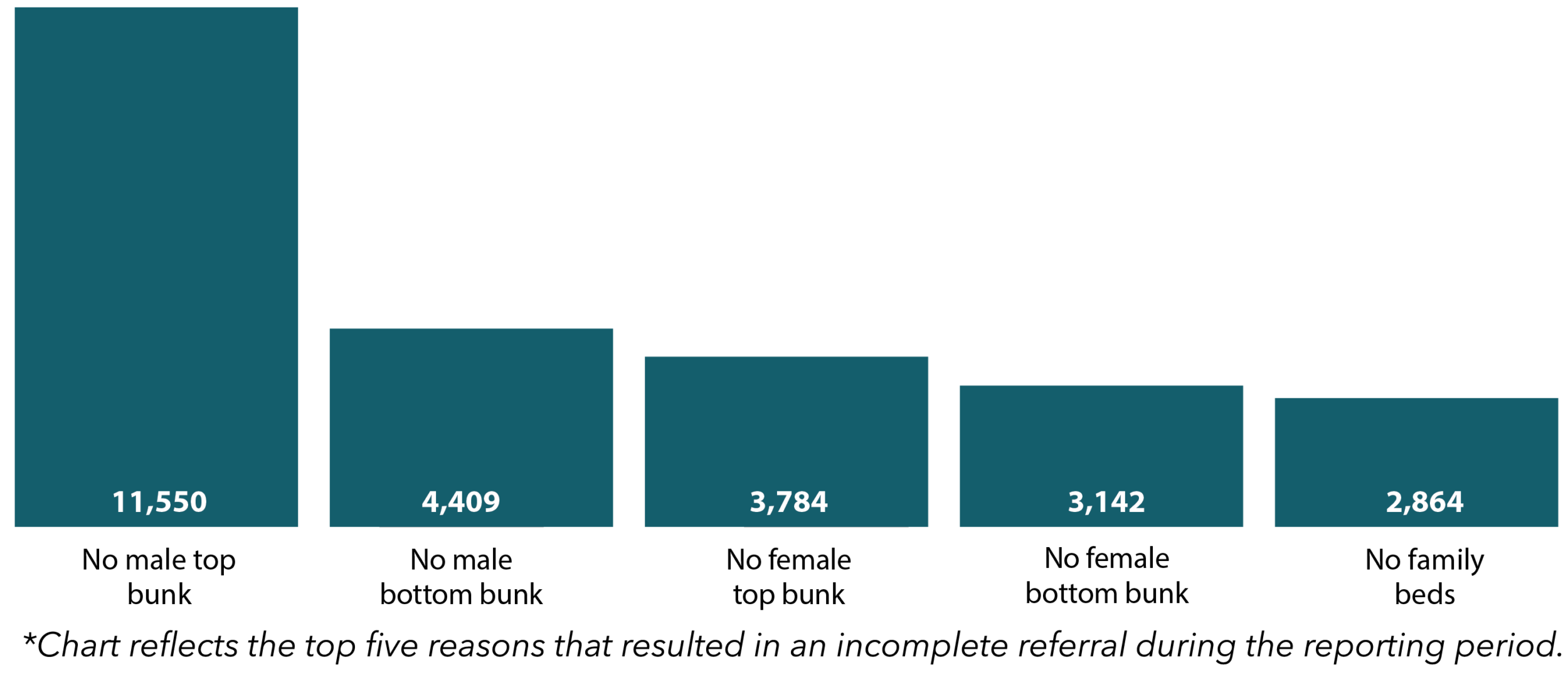
Most Frequent Reasons for Incomplete Referrals
Fiscal Year (July 1, 2025 - June 30, 2026)
UNIVERSAL TERMS OF SERVICE
For months during FY 2026, SDHC engaged with homelessness services program operators and individuals with lived experience in homelessness through a series of listening sessions to review the Universal Terms of Service, Termination, Suspension & Appeals Policies and Procedures (Universal Terms of Service) that apply to SDHC-administered homelessness shelter programs and the safe sleeping programs that the City’s Homelessness Strategies and Solutions Department administers.
This process was designed to identify opportunities to provide greater clarity, address implementation challenges, and streamline how the Universal Terms of Service are applied across programs. Updates to the Universal Terms of Service are anticipated in Fall 2026 to support greater consistency, transparency, and ease of implementation for program participants and service providers.
SDHC developed and initially implemented the Universal Terms of Service in FY 2025 to standardize practices and promote a uniform client experience across all of these City-funded shelter programs.
SYSTEM COORDINATION
SDHC’s system coordinators work with clients experiencing homelessness, service providers, housing providers and City and County agencies to remove barriers to housing. They often help identify where the system may not be functioning optimally and work with community partners to implement solutions. For example, system coordinators are able to track progress on a client’s position in the approval process for housing and liaise between property management, compliance, rental assistance, and others to ensure communication to facilitate a successful housing placement.
HOUSING VOUCHERS FOR PEOPLE EXPERIENCING HOMELESSNESS
SDHC has committed approximately 35 percent of its federal rental housing vouchers to assist households experiencing homelessness.