AFFORDABLE HOUSING
More than 91 percent of the affordable rental housing units in service in the City of San Diego were created or preserved with the San Diego Housing Commission’s (SDHC) participation. When SDHC is involved, rents at affordable housing properties are required to remain affordable—typically for 55 years—for households at specified levels of low income. SDHC continues to perform a variety of functions to produce and preserve affordable housing units amid an ongoing shortage of rental homes that families can afford. SDHC serves as a lender, issuer of Multifamily Housing Revenue Bonds, developer, owner of affordable rental housing units, and administrator of City land use programs, such as Inclusionary Housing. SDHC also monitors properties to ensure compliance with affordability restrictions. Through its first-time homebuyer programs, SDHC provides opportunities for families with low or moderate income to become homeowners.

Fiscal Year (FY) 2025 (July 1, 2024 – June 30, 2025)

$13.8 Million
SDHC loans invested
$47 Million
Multifamily Housing Revenue Bonds issued

SDHC loans approved
$474.5 Million
Multifamily Housing Revenue Bonds Authorized or with Preliminary Authorization
546
SDHC rental housing vouchers awarded
FINDING COMMUNITY AT SENIOR RESIDENCE
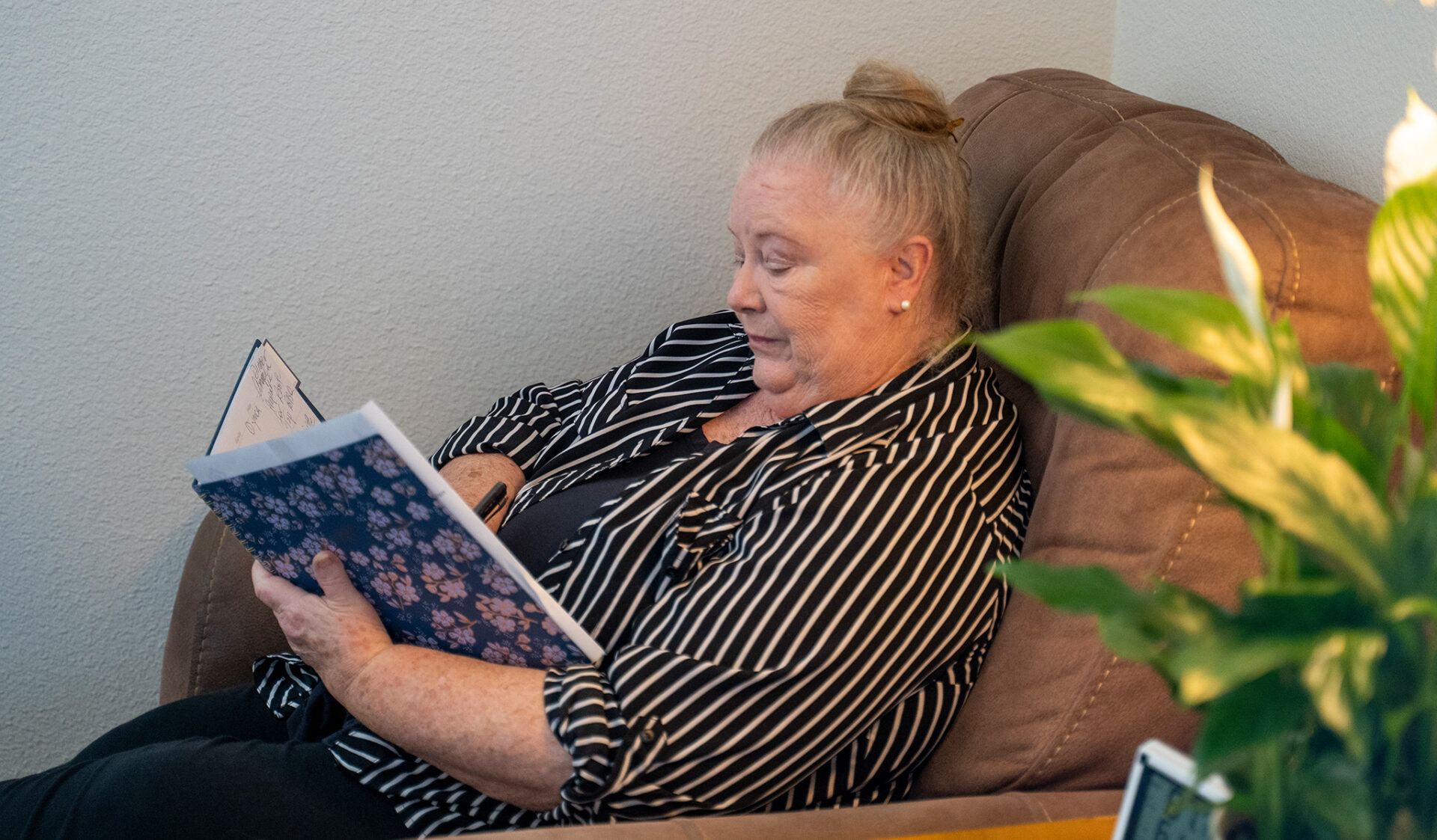
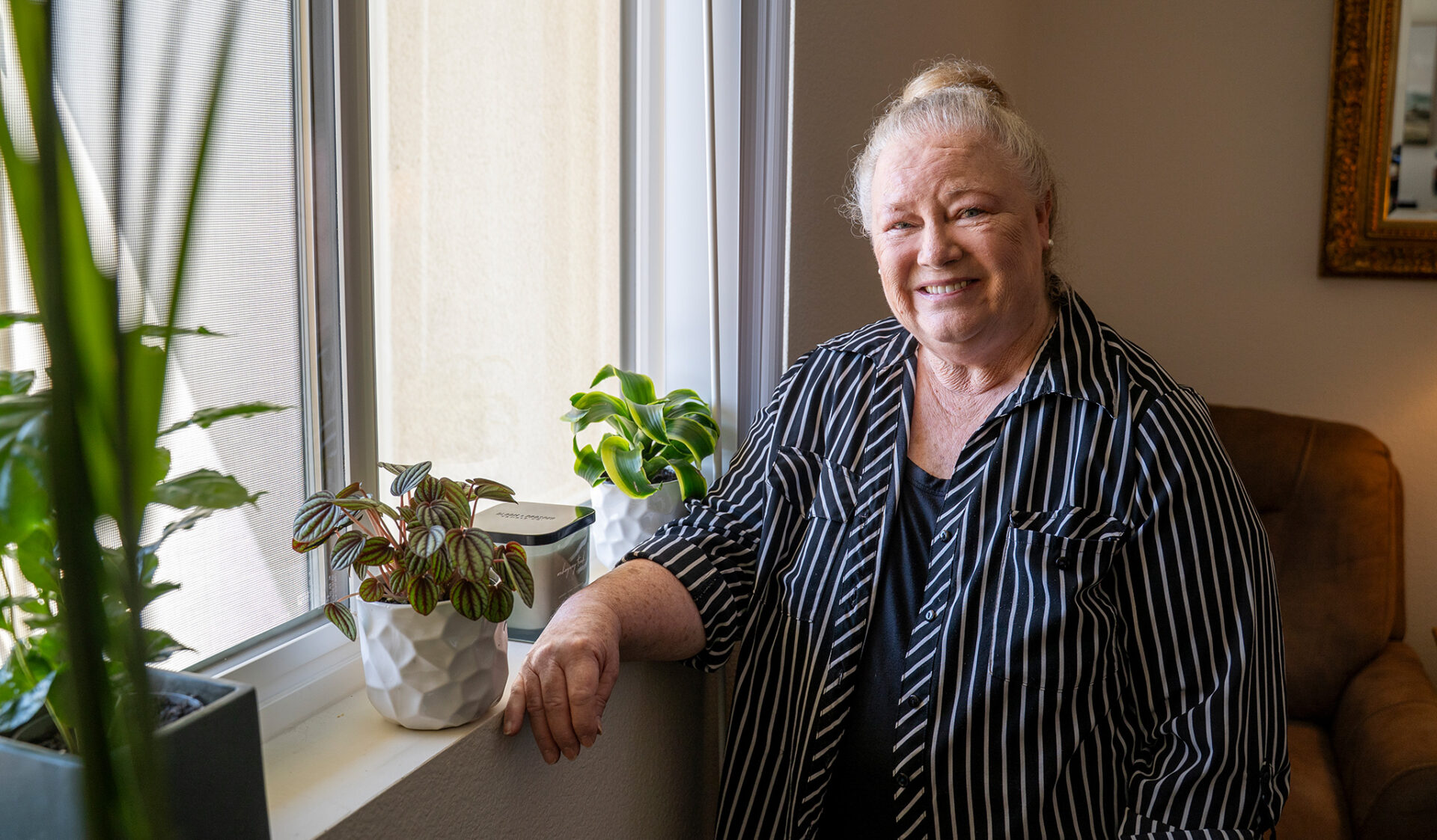
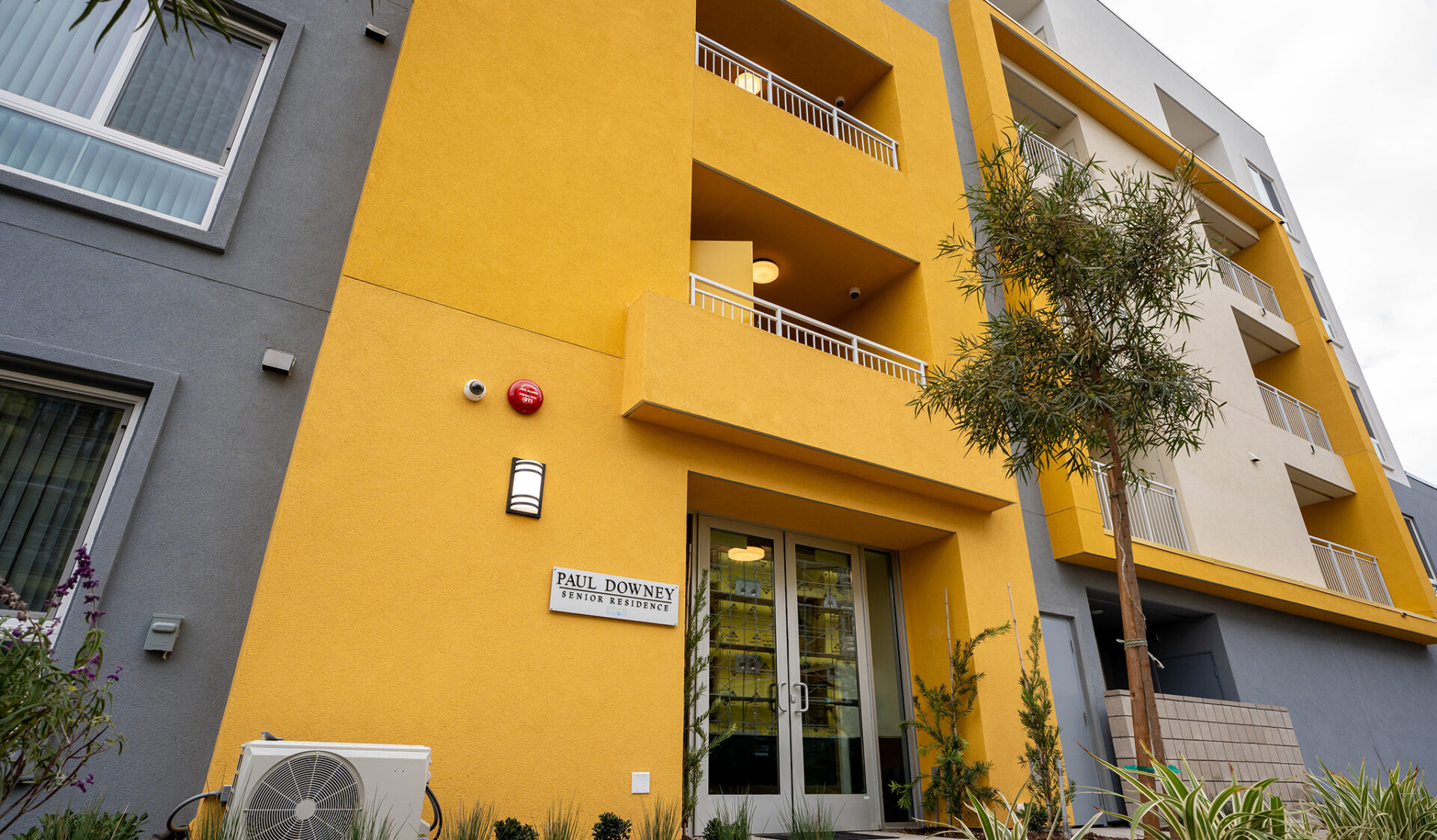
After being priced out of her longtime Clairemont home, Georgia now has a place she can afford – and a community she loves – just blocks away at the Paul Downey Senior Residence, developed in collaboration with SDHC.
“My gosh, there are so many things, from exercise classes to medical assessments,” Georgia said. “I think it’s wonderful. I don’t think I’ve ever seen that at any other place.”
A retired certified nursing assistant and personal chef, Georgia lived at her previous rental home for a decade. When the property’s new owners implemented changes, including doubling her rent, she knew she had to move.
She heard about Paul Downey Senior Residence (formerly known as Messina Senior Apartments) from a friend. Chelsea Investment Corporation developed the property, and Serving Seniors provides on-site services for residents and the Clairemont community. SDHC awarded a $3.95 million loan toward the development and eight rental housing vouchers to help seniors with extremely low income pay their rent.
Paul Downey Senior Residence consists of 78 rental apartments affordable for seniors ages 62 and older with income ranging from 30 percent to 70 percent of San Diego’s Area Median Income (AMI).
“I loved the security and the upper floor level. It just made me feel more safe,” Georgia said of the property.
Soon after she moved into her one-bedroom apartment, Georgia made friends and joined community activities. She enjoys playing the tile game Rummikub in her apartment with neighbors and family, in addition to attending weekly bingo games, magic shows and fitness classes.
Her cooking background also makes her a fixture of the property’s regular rooftop potluck events.
“There’s a lot of people that are thankful for getting into Messina and having the community be as close as we are when we have our potlucks,” she said. “They’re sitting around a table, they’re happy, they’re healthy, they’re eating the food. They’re actually loving the food.”
Georgia said she considered moving away from San Diego. But with her mother and two sons living in the area, she’s thankful and relieved to remain in her community.
“My sons said they saw a big change in me,” she said.

SDHC INVESTING IN AFFORDABLE HOUSING
LOANS
SDHC awards loans through a competitive Notice of Funding Availability, subject to approval by the SDHC Board of Commissioners. These loans consist of federal, state and local funds SDHC administers:
Federal HOME Investment Partnerships Program (HOME) funds that the U.S. Department of Housing and Urban Development (HUD) awards to the City of San Diego.
State of California Local Housing Trust Funds awarded to SDHC.
City of San Diego Affordable Housing Fund.
SDHC Multifamily Rental Housing Loan Portfolio June 30, 2025


MULTIFAMILY HOUSING REVENUE BONDS
SDHC authorizes the issuance of tax-exempt Multifamily Housing Revenue Bonds to finance affordable housing developments, subject to approval by the Housing Authority of the City of San Diego. These bonds do not create any financial liability for SDHC, the City of San Diego, or the Housing Authority of the City of San Diego. Private sources of funds, such as revenue from the development, are used to repay the bonds.
SDHC Multifamily Housing Revenue Bond Portfolio June 30, 2025
RECYCLED BONDS
SDHC collaborates with the California Housing Finance Agency (CalHFA) to recycle previously allocated Multifamily Housing Revenue Bonds. When a developer pays off the majority of its Multifamily Housing Revenue Bonds upon construction completion, those bonds typically are “retired” and are no longer available. Bond recycling allows the bonds to be reused.
Bonds Recycled from Developments in the City of San Diego FY 2025
GRAND OPENINGS
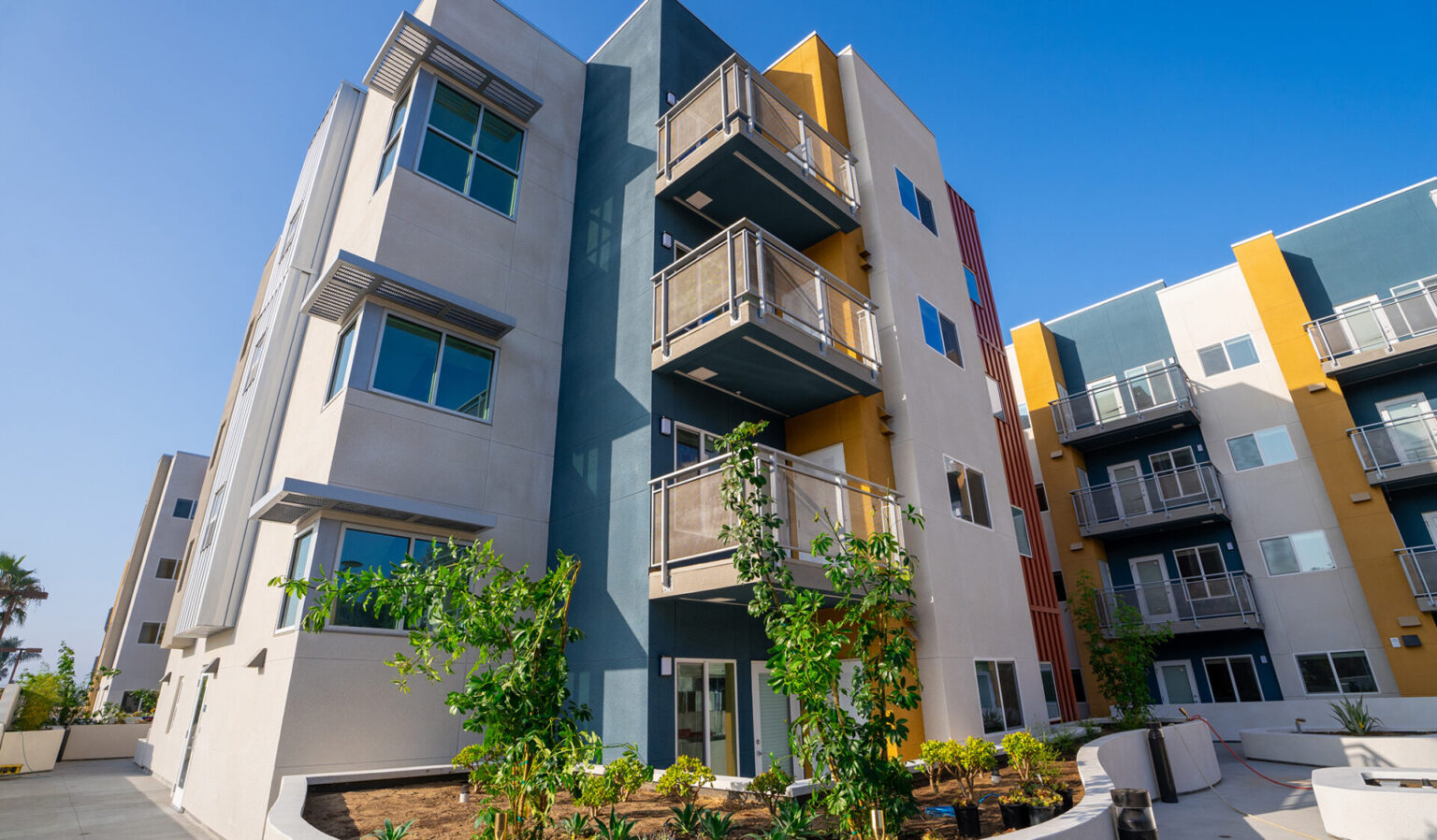
Ventana al Sur
100 Affordable Units
October 10, 2024
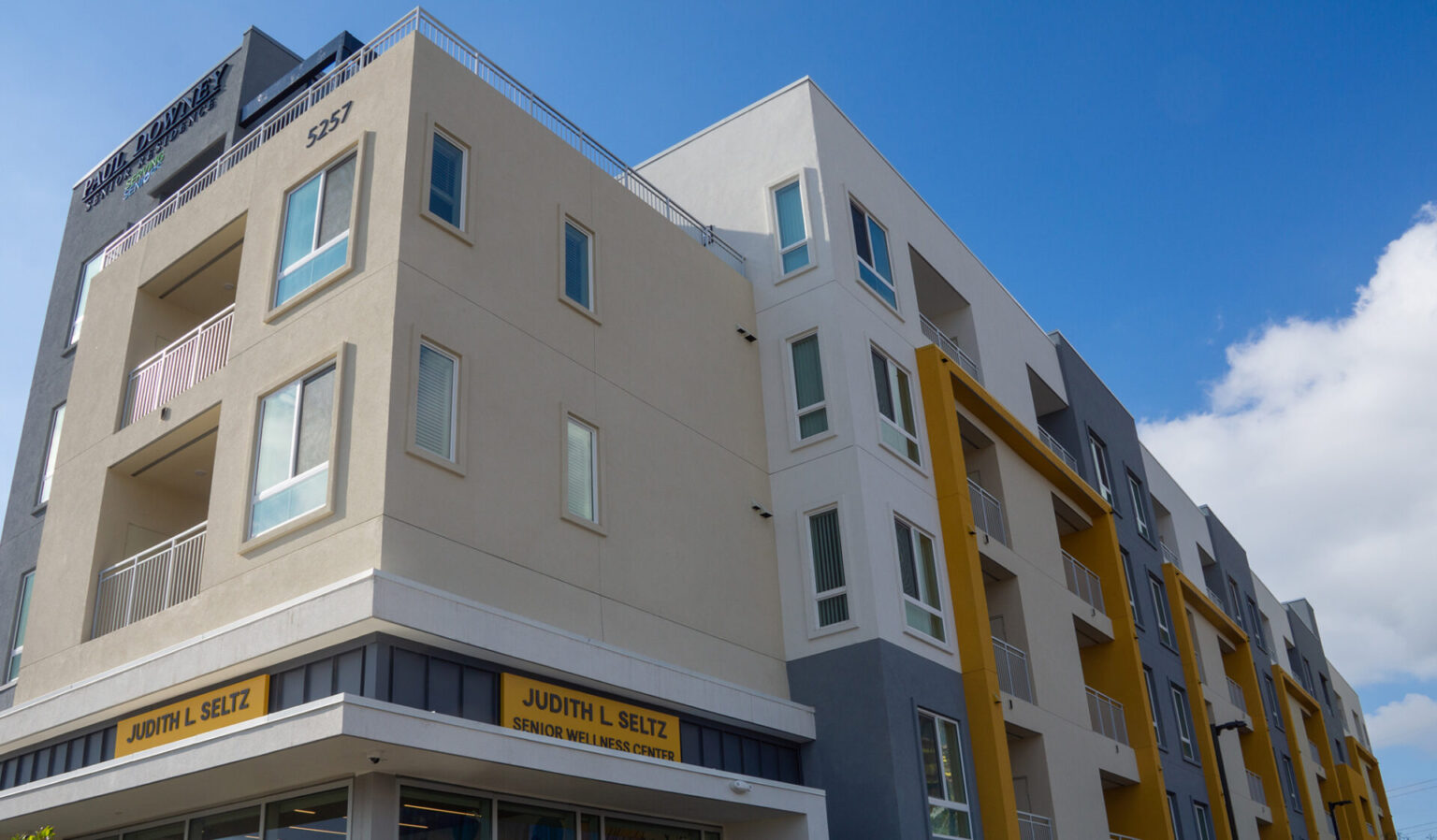
Paul Downey Senior Residence
78 Affordable Units
January 30, 2025
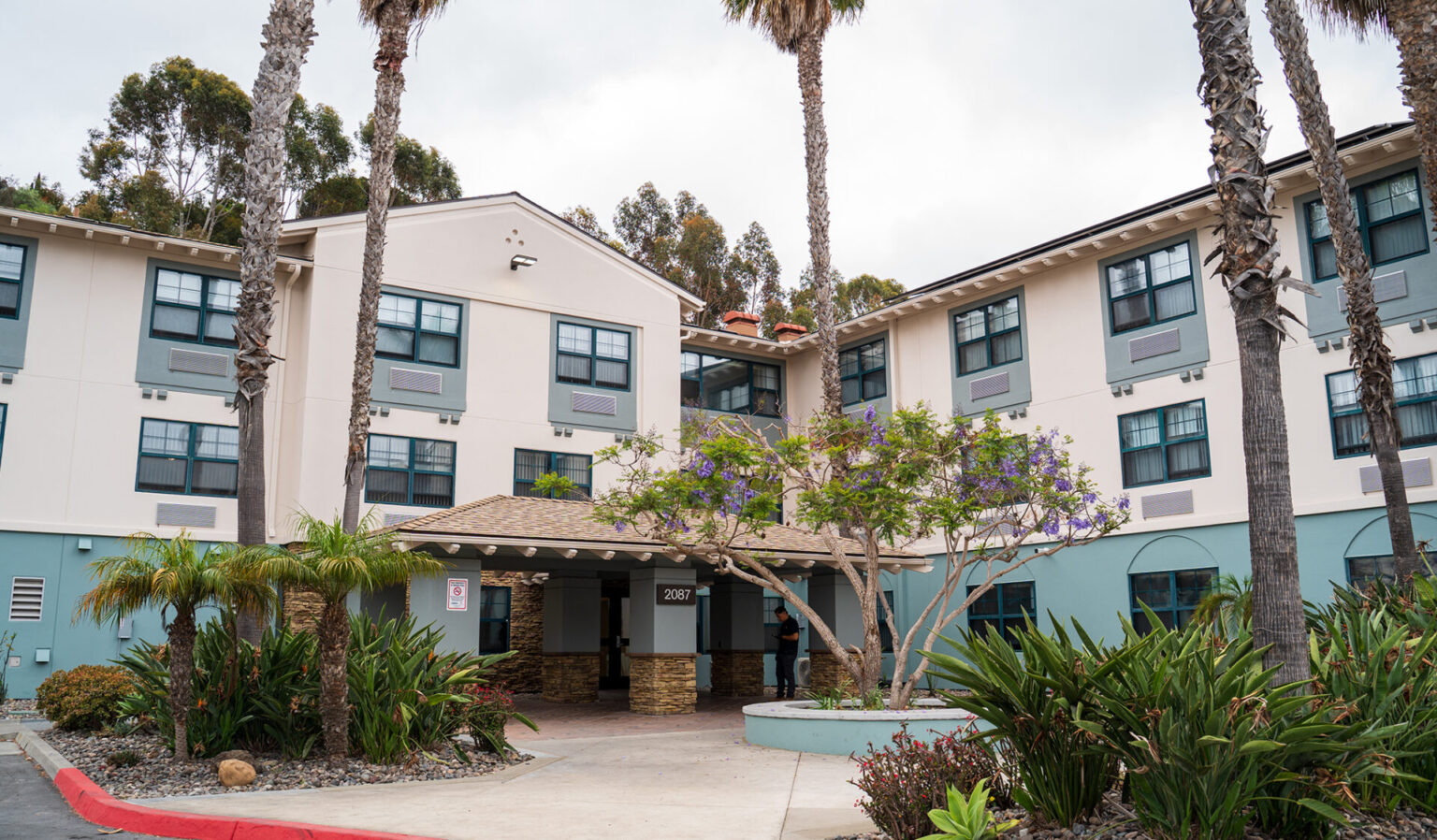
Presidio Palms
161 Affordable Units
June 12, 2025
GROUNDBREAKINGS
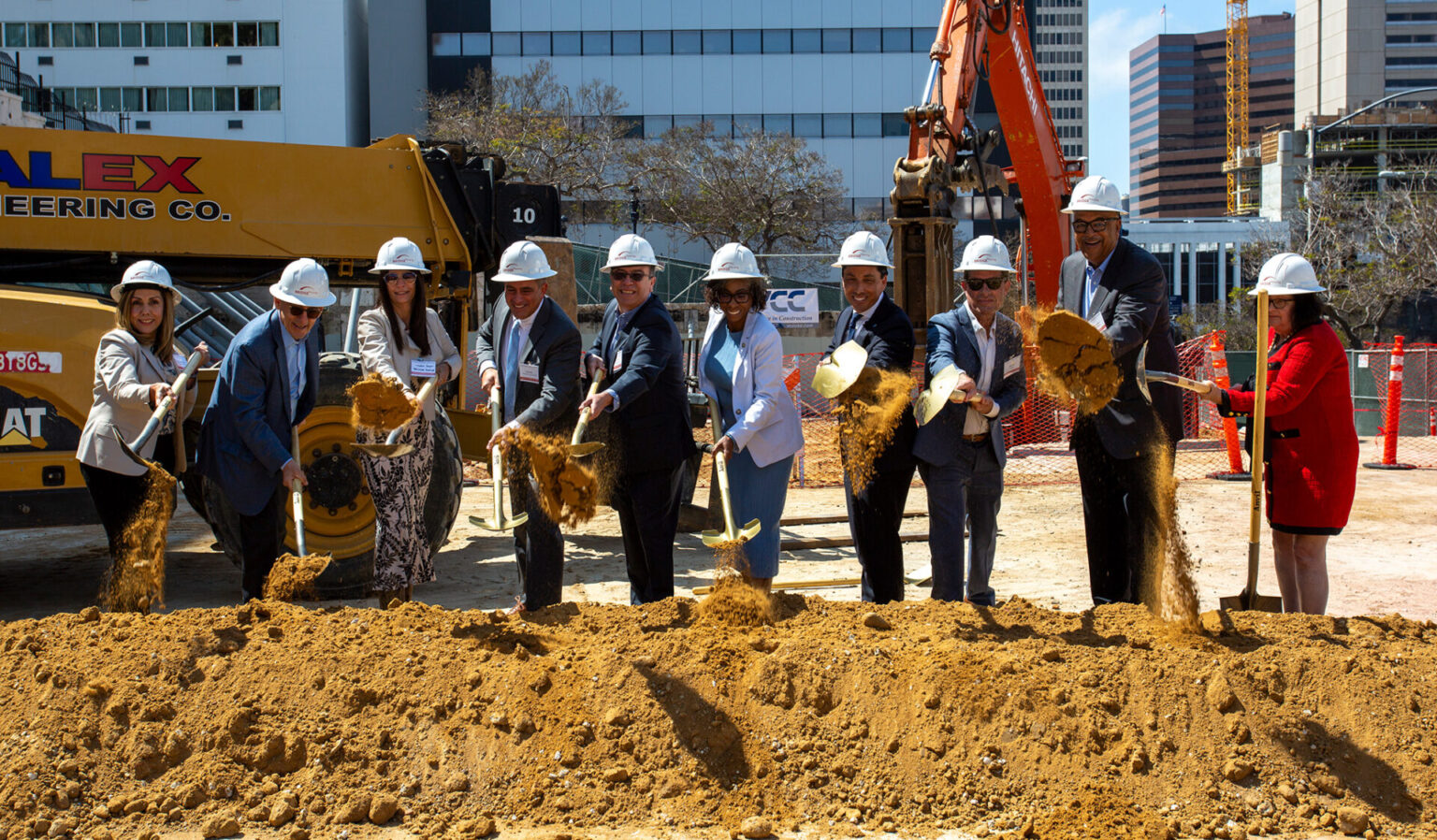
Kindred Apartments
125 Affordable Units
April 29, 2025
‘TOPPING OFF’ MILESTONE
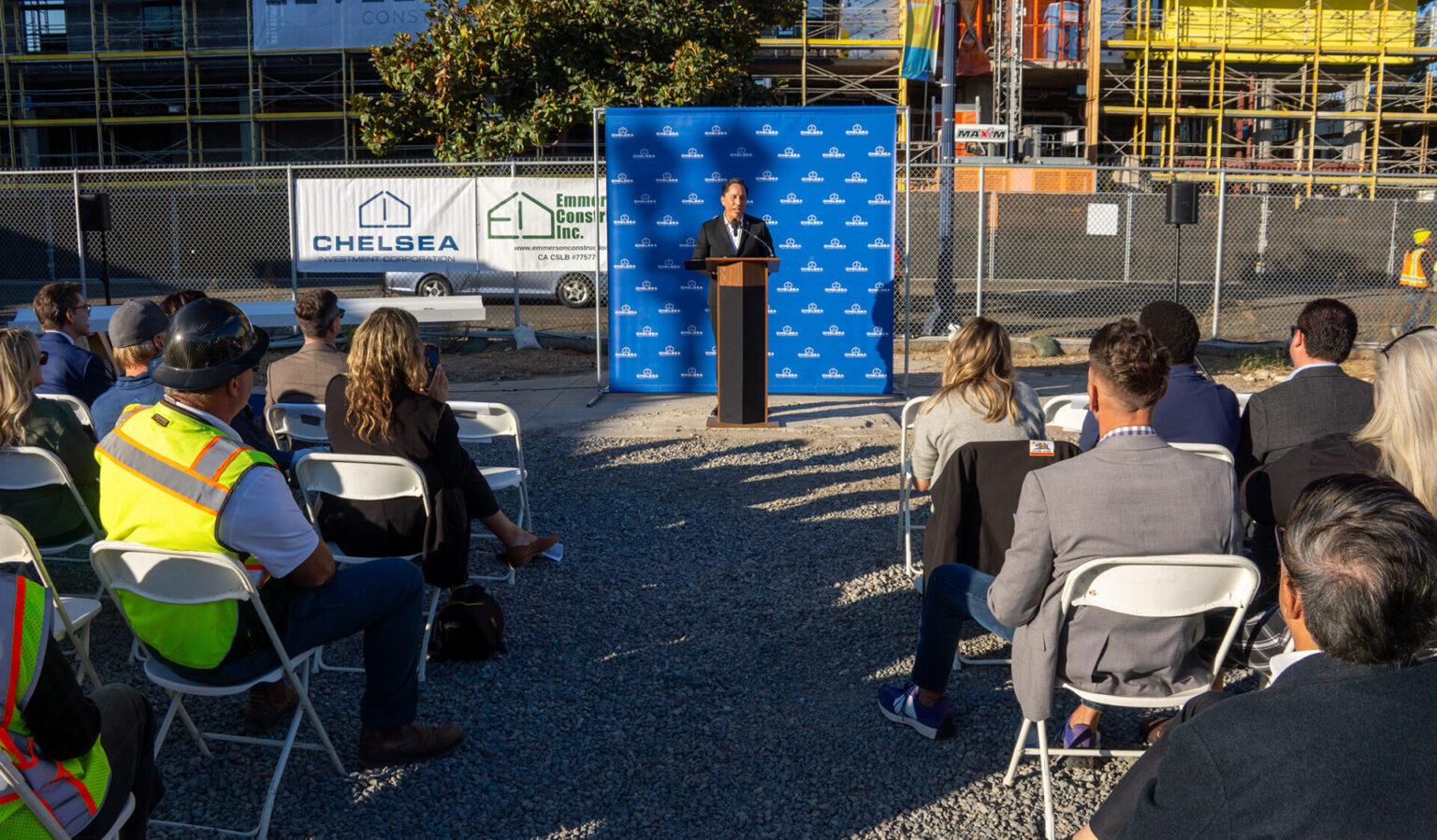
Harrington Heights
270 Affordable Units
November 22, 2024
AFFORDABLE HOUSING COSTS STUDIES
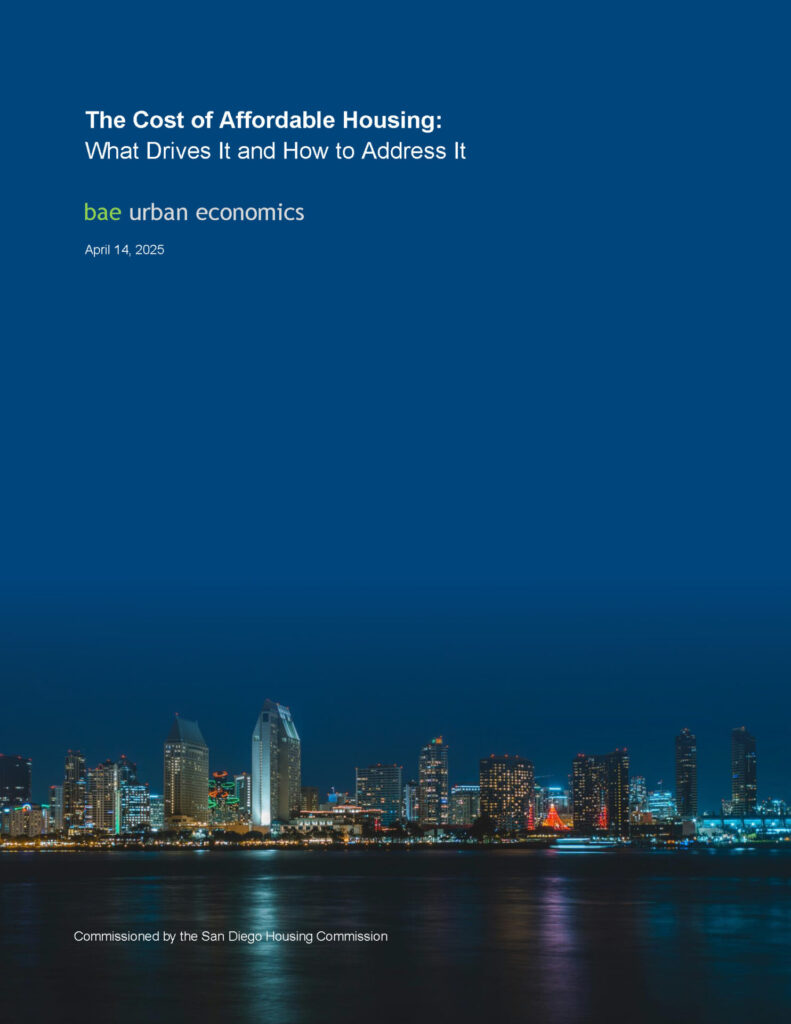
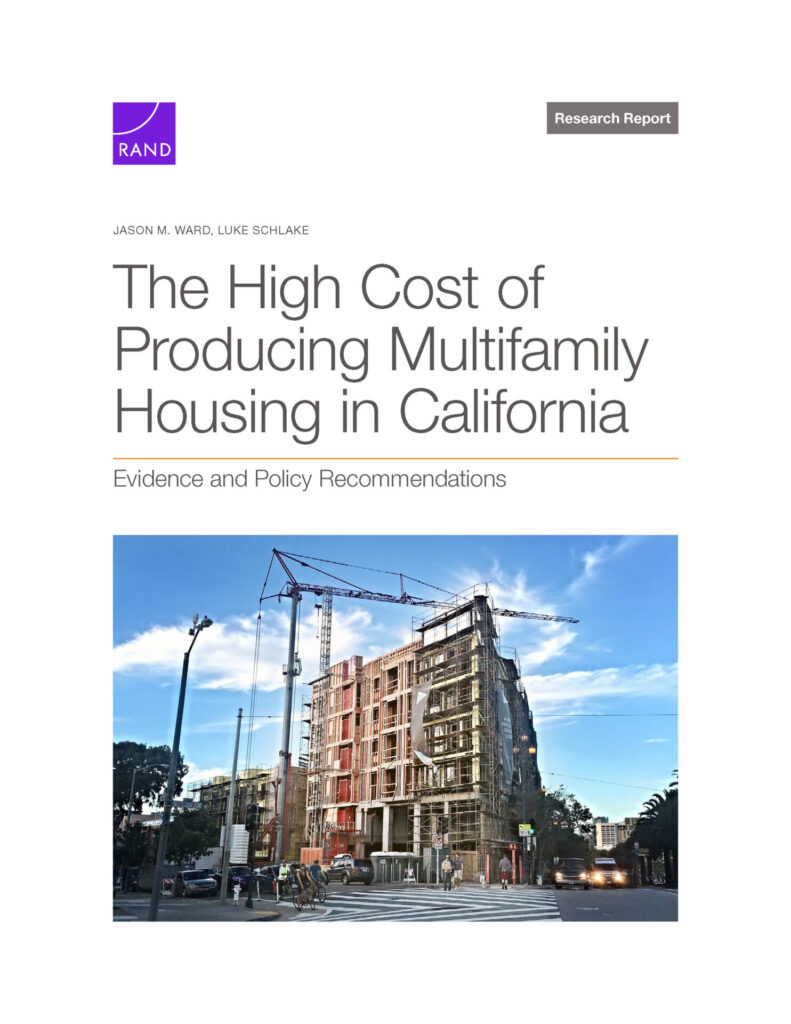
Amid funding constraints at all levels of government, the cost per unit to develop affordable housing has continued to rise in recent years. SDHC engaged BAE Urban Economics for a comprehensive study of the cost of developing affordable housing, what drives it and how to mitigate it. The study identified factors that contribute to rising costs and strategies that policymakers may want to consider to address these issues. The BAE study and information about a RAND study also released in FY 2025 about affordable housing development costs were presented to the SDHC Board of Commissioners on April 25, 2025, and to the City Council’s Land Use and Housing Committee on June 5, 2025.
CITY LAND USE PROGRAMS
City land use programs, such as Inclusionary Housing and Density Bonus, support the creation of affordable housing in the City of San Diego. Deed restrictions that SDHC executes require rents to remain affordable for specific units in a development. SDHC monitors the units to ensure they are occupied by households with income at or below the required income level and that the rent charged for the affordable units is at or below the amount allowed for a household with that income.

City Land Use Programs
FY 2025
SDHC-OWNED AFFORDABLE HOUSING
Thousands of households in the City of San Diego have homes with affordable rents at properties that SDHC or its nonprofit affiliate, Housing Development Partners (HDP), owns or manages. These include affordable housing units with supportive services for people who experienced homelessness.
Capital Improvements – FY 2025
PEACE OF MIND WITH AN AFFORDABLE APARTMENT
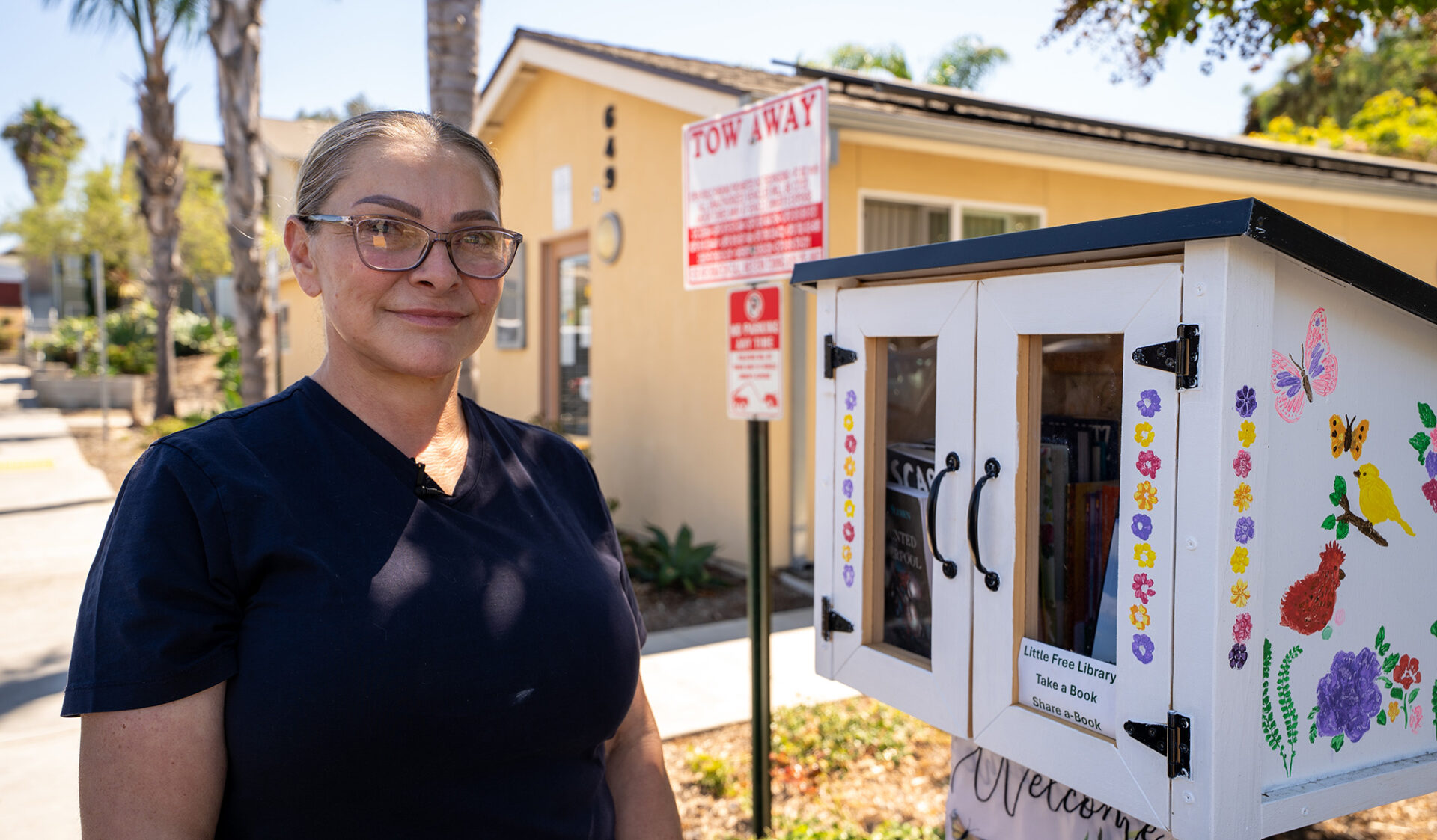
Renting an affordable apartment from SDHC gave Paula a better chance of managing the unexpected, like getting laid off from the job she had for 18 years as a shipyard machinist and deciding to become her own boss.
“Ever since I’ve been here, this place has just helped me not to stress out so much about everything, at least having a roof over my head and being able to maintain that,” Paula said.
That wasn’t the case when she became a widow in 2008 and had to provide for her son and daughter. At that time, she rented a house in Logan Heights and most of her paycheck went toward rent.
In 2021, SDHC called and offered Paula the chance to move into one of its affordable housing properties. She moved in with her daughter and young granddaughter. Her son already was married and living elsewhere.
“I walked in, and it looked so nice and bright in here, and the neighbors were nice,” Paula said.
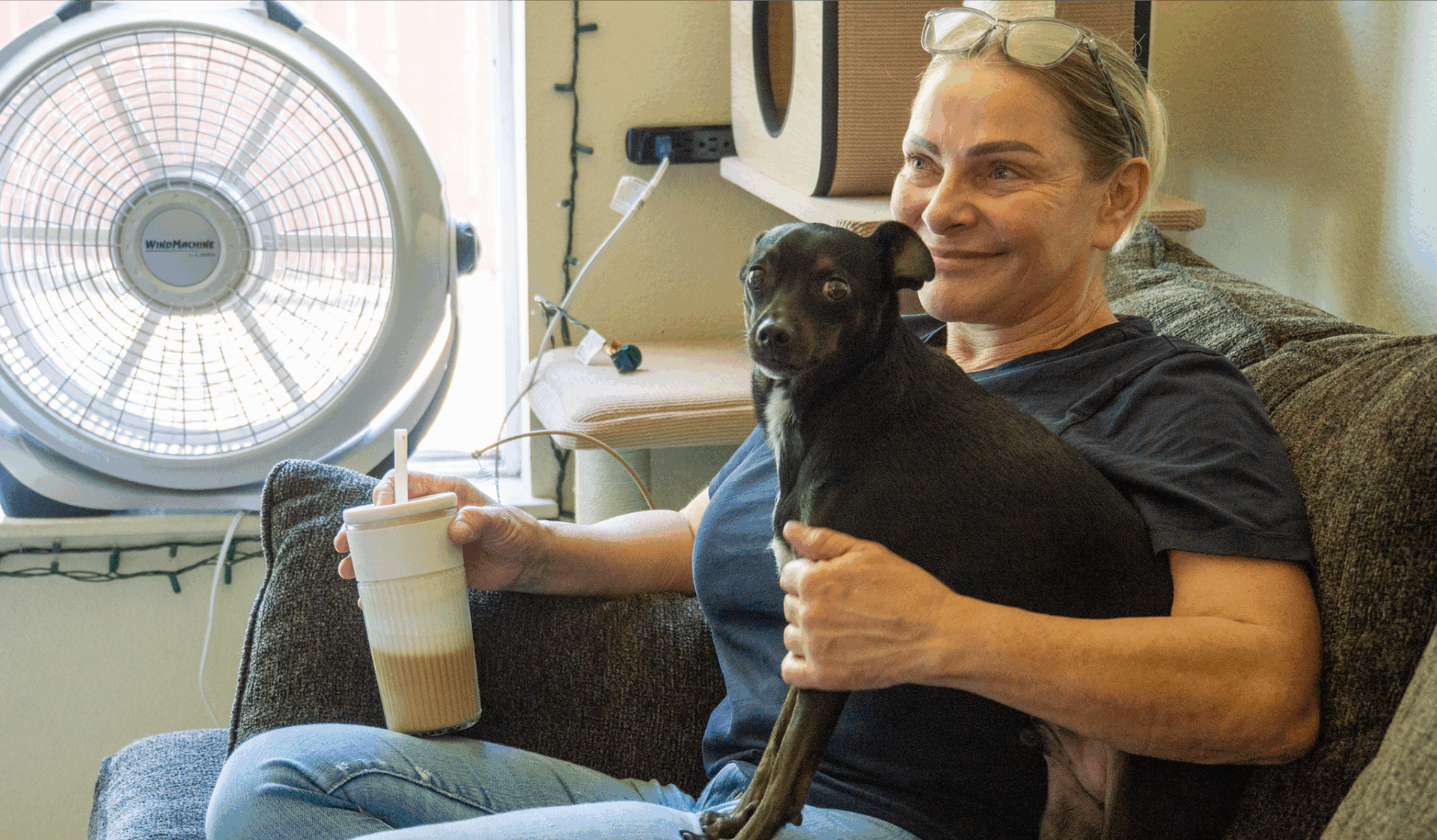
Her daughter and granddaughter have since moved out, and now Paula shares the apartment with her sister, along with some cats and a dog named Oreo.
Paying affordable rent each month took away Paula’s housing-related worries. After she lost her job, her rent was readjusted based on her lost income, giving her some time to figure out her next steps.
“If I was living in a regular house, I wouldn’t be able to pay that rent anymore. So, I felt relieved that the rent would go with my income, and I would still be able to have a place,” Paula said.
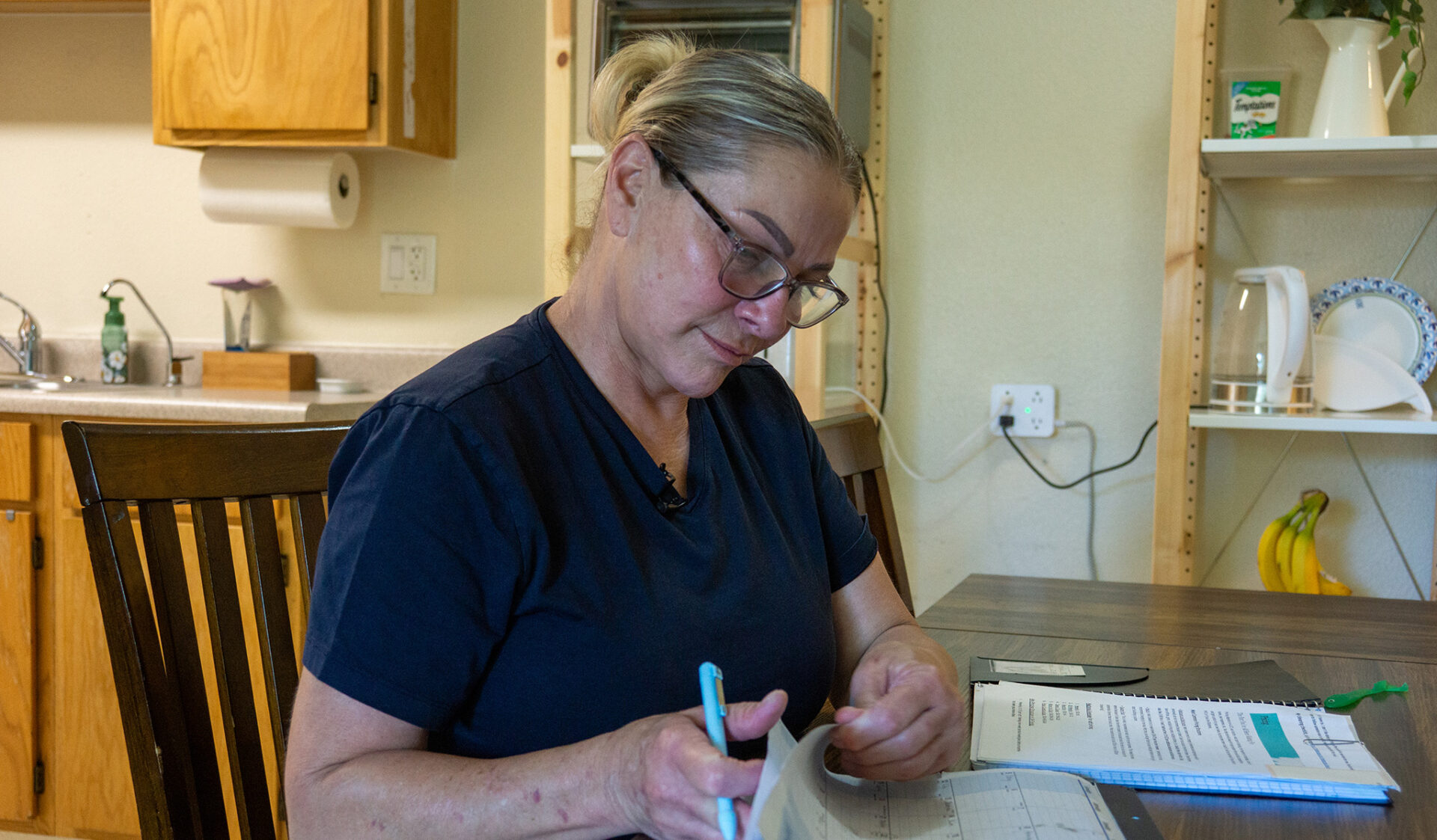
Paula helped clean the apartment of a friend who was moving and did such a good job that her friend suggested she start a cleaning service, which she did.
“My future goal is I would like my business to grow enough to where I could put money away and maybe move on, get a place of my own sometime,” Paula said.
UPDATE: UTILITY SAVINGS AT SDHC PROPERTIES
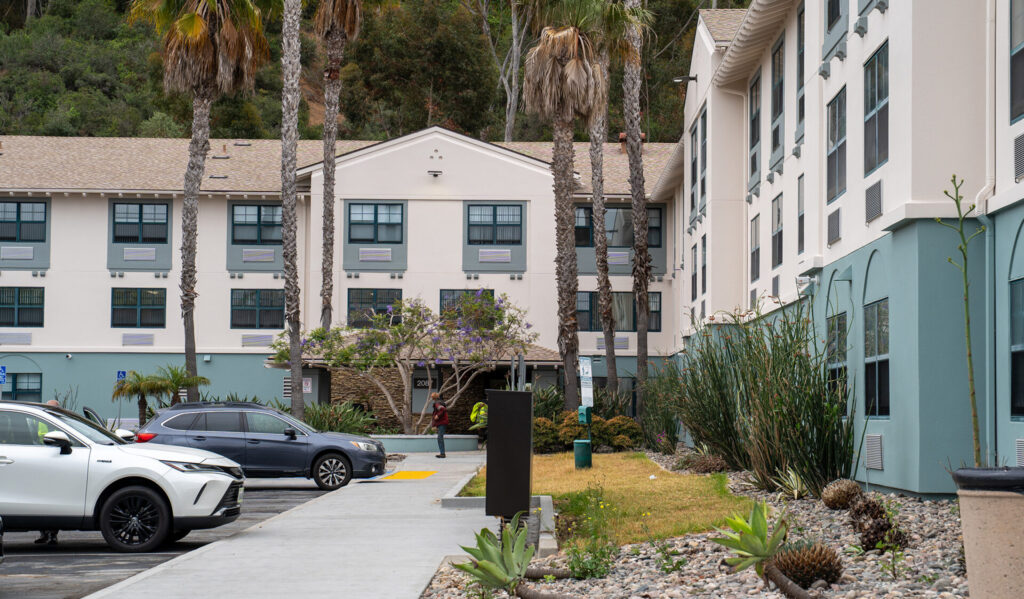
In July 2025, San Diego Gas & Electric informed SDHC that it approved applications for three SDHC properties – Kearny Vista, Valley Vista and Presidio Palms – to receive discounts on gas and electricity costs through the California Alternate Rates for Energy (CARE) program.
The CARE program provides energy discounts for households with low income. SDHC will receive a 30 percent discount on energy costs at these properties, which provide 493 affordable housing units with supportive services for people who experienced homelessness. SDHC pays all utilities at these properties on behalf of the residents.
In 2024, SDHC sponsored Assembly Bill 2672, which extended the CARE program’s eligibility for discounts to master-metered properties that receive state Homekey funds. The state awarded Homekey funding to SDHC for the acquisition and rehabilitation of Kearny Vista, Valley Vista and Presidio Palms.
Estimated Savings
*Estimate generated by Microsoft Copilot
INCREASING DENSITY AT SDHC PROPERTIES
SDHC’s proposal to create additional affordable housing by increasing density at an existing affordable housing property moved forward during FY 2025.
SDHC’s University Avenue Densification Pilot Project would increase the density at Casa Colina del Sol, a property in the real estate portfolio of SDHC’s nonprofit affiliate, Housing Development Partners (HDP). Casa Colina del Sol currently consists of 75 deed-restricted affordable rental housing units for seniors with low income.
In FY 2025, SDHC negotiated and executed a Disposition and Development Agreement with the County of San Diego to establish site control of vacant County land adjacent to Casa Colina del Sol to facilitate the densification project.
SDHC staff advanced the proposed architecture and civil engineering design to a design development level to arrive at an 88-90-unit concept at Casa Colina del Sol. SDHC also completed a California Environmental Quality Act (CEQA) review with the County of San Diego.
Next steps anticipated in FY 2026 include a procurement process to identify a turnkey developer to partner with HDP for the financing and construction of the proposed development, negotiating a contract with the identified developer, and requesting approvals from the SDHC Board of Commissioners and HDP Board of Directors to move the project forward.
FIRST-TIME HOMEBUYER PROGRAMS
For more than 35 years, SDHC has helped families with low or moderate income become homeowners through first-time homebuyer assistance for down payments and closing costs or an affordable for-sale housing program that makes homes available at below-market value. In FY 2025, SDHC continued to operate these programs for the City of San Diego while also administering first-time homebuyer assistance for the County of San Diego and the cities of Chula Vista and El Cajon.

CITY OF SAN DIEGO
FY 2025
28
Households Assisted through First-Time Homebuyer Program
$2.9 Million
Assistance for
First-Time Homebuyers
17
Households Assisted through Affordable
For-Sale Housing
SDHC HOMEOWNERSHIP ADVISOR
An SDHC Homeownership Advisor is available to answer questions about first-time homebuyer programs, assess financial preparedness and, as needed, connect callers with counseling agencies that provide the types of services they need to become ready to buy a home.
FY 2025
23
Referrals to a Lender
34
Referrals to Counseling
HOMEOWNERSHIP DREAM REALIZED
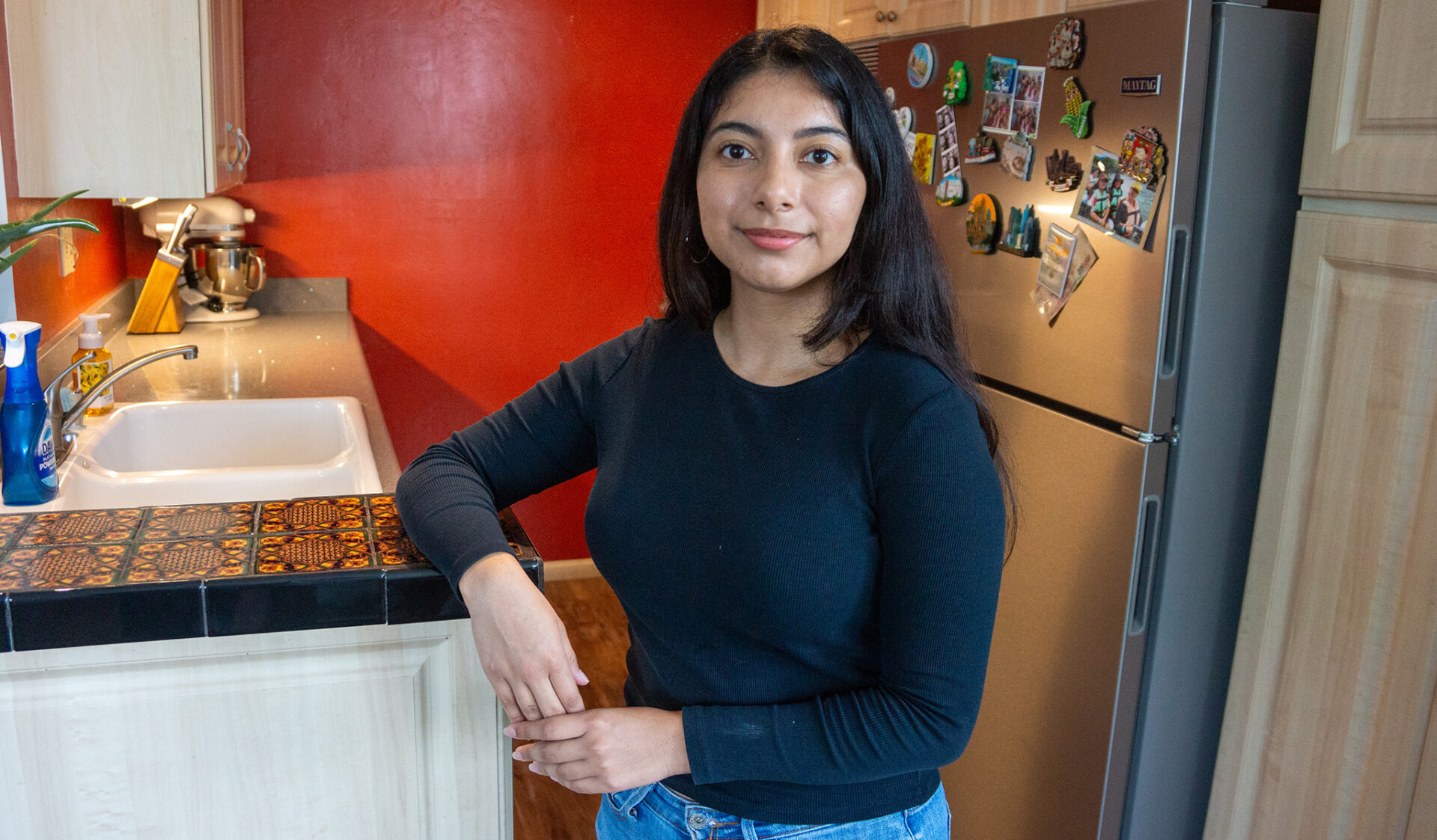
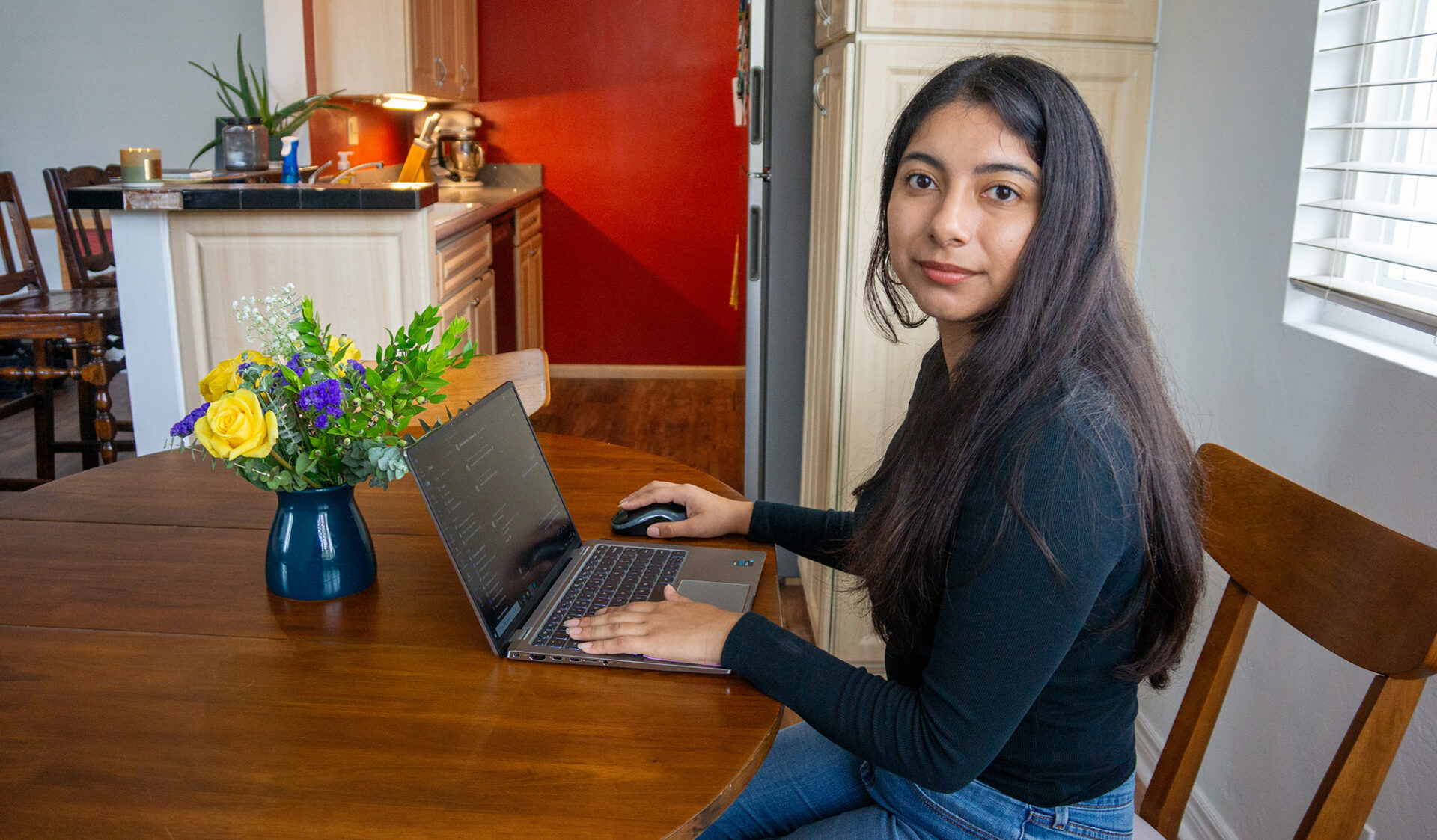
After years of renting in San Diego’s North Park neighborhood, the “stars aligned” for Alexandra to achieve homeownership nearby with help from SDHC’s First-Time Homebuyer Program.
“So, when I actually was able to buy my house, I had a lot of people ask me, ‘How did you do it? How are you able to get to where you are now as a homebuyer, especially right now in this economy?’” Alexandra said. “And it was exciting to say, ‘There are programs out there for you to take advantage of.’”
With a stable career as a business systems analyst, combined with minimal debt and a good credit score, Alexandra started researching first-time homebuyer programs in California and discovered SDHC’s website. There, she learned about SDHC’s deferred-payment loans and homeownership grants available to help low- and moderate-income first-time homebuyers buy their first homes, along with a list of participating lenders.
“Luckily, the program listed approved lenders,” Alexandra said. “And out of all those – I don’t know, so many lenders – I so happened to pick my lender, who was amazing, and she was so knowledgeable about the whole process.”
Alexandra decided to pursue a home she had seen at an open house in her neighborhood, a one-bedroom, one-bathroom condominium. She loved its large windows overlooking the street, how well it was maintained by its previous owners and the community’s walkability.
Through SDHC’s First-Time Homebuyer Program, she received a deferred-payment loan for the down payment and $10,000 in closing cost assistance—funding that she said got her “through the finish line.”
She finalized the purchase of her home in December 2024, weeks before the Christmas holiday. She recalled the excitement of setting up her Christmas tree and sitting on the floor of the condo to absorb the moment. Since then, she has furnished the condo and repainted its walls to reflect her personal style.
Alexandra said being able to buy her condo with SDHC’s assistance “meant a lot to not just me, but a lot of people around me.”
“I definitely don’t think it would’ve been possible, at least not as soon as I’d done it, without the program,” she said.
COUNTY OF SAN DIEGO
FY 2025

CITY OF CHULA VISTA
FY 2025
CITY OF EL CAJON
FY 2025
ADU FINANCE PROGRAM
In FY 2025, SDHC’s Accessory Dwelling Unit (ADU) Finance Program assisted homeowners with ADU construction projects that had been approved in FY 2024. One ADU financed through the program completed construction, and SDHC continues to monitor and support nine ADUs for which SDHC provided financing. The rent for an ADU financed through this program must remain affordable for seven years for households with income up to 80 percent of San Diego’s Area Median Income (AMI). The property owner cannot rent to a family member during this seven-year period. SDHC’s ADU Finance Program provides low-interest construction-to-permanent loans (up to $250,000) and technical assistance for homeowners earning up to 150 percent of AMI who have a minimum credit score of 680.
A HELPFUL PARTNERSHIP FOR ADU CONVERSION
With help from SDHC’s ADU Finance Program, Ramon turned his garage into an affordable home for a resident in his community who needs it as well as a source of extra income for his family.
“I would recommend to other people, if they’re trying to do an ADU, to partner with somebody that already knows exactly what needs to be done,” said Ramon, who works as a property manager and lives in Mira Mesa. “Partnership with San Diego Housing Commission has been a very good experience, and I will recommend others to partner with (them).”
Before engaging with SDHC, Ramon tried to build the ADU on his own with the help of a contractor.
He wanted to convert the garage at his longtime home that he’d been using as storage space and a home gym to a one-bedroom apartment. But he had a “bad experience,” and those plans went unfulfilled – until he learned about SDHC’s ADU Finance Program.
“One of these days, I was on the website – the San Diego Housing Commission website – and I kind of see the (ADU Finance) Program,” he said. “I started researching and decided to apply, and it’s been a great experience, all the support that the San Diego Housing Commission provided to make this happen.”
With the program’s help, the garage conversion began in January 2025 and was completed by May. His former garage space now is a nearly 500-square-foot living area with a kitchen, a bedroom and a full bathroom. It also includes a stackable washer and dryer in the unit.
From financing to permitting, Ramon said the process working with SDHC was “very smooth.”
“Believe it or not, five, 10 years is going to come fast, and we’re trying to prepare for our retirement at the same time,” Ramon said. “So, it’s been both—trying to have some extra income for us and at the same time be able to provide affordable and quality housing to somebody that may need it.”